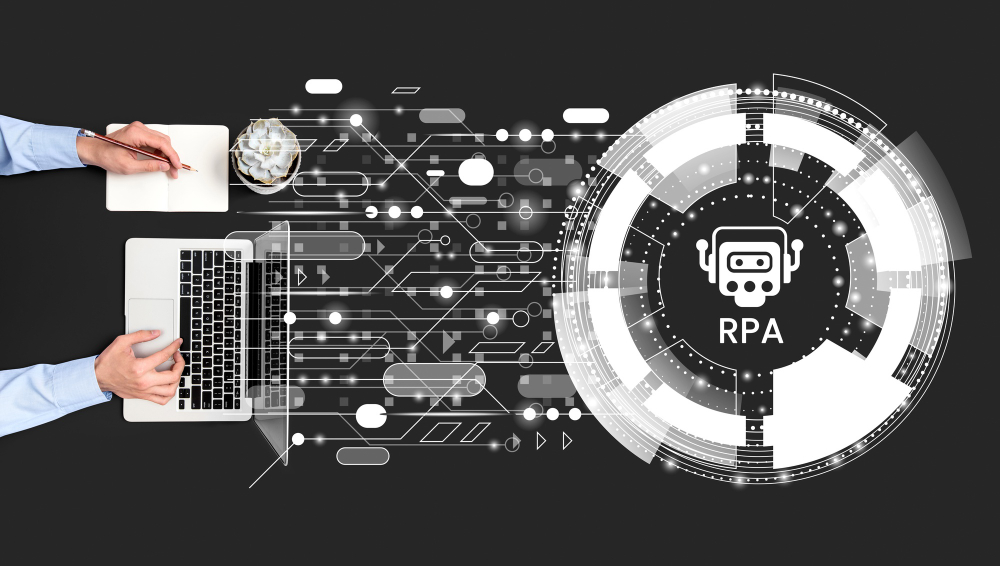
Scaling an enterprise with agentic AI is less about replacing people and more about redesigning how work moves across teams, systems and decision points. Agentic AI workflows combine AI agents, business rules, APIs, enterprise data and human oversight to execute multi-step processes rather than simply answer questions.
In 2026, enterprises are increasingly exploring agents for customer service, sales operations, IT support, finance, compliance and other workflow-heavy functions. However, scaling these systems requires more than adding an AI model. Organizations need an architecture for agent coordination, controlled access to enterprise systems, monitoring, security guardrails and measurable business outcomes. IBM describes the emerging agentic enterprise around agents, data, automation and governance, while Deloitte’s 2026 research emphasizes that workflow and process redesign are central to realizing value.
What are Agentic AI workflows?
An agentic AI workflow is a business process in which one or more AI agents can interpret a goal, reason through multiple steps, use approved tools or APIs, and take actions within defined limits. Unlike conventional automation, which generally follows predetermined rules, agentic systems can adapt their next step based on the information they retrieve and the state of the workflow.
A typical enterprise workflow can include five layers:
- Goal and trigger: A customer request, business event or scheduled task starts the workflow.
- AI agent: The agent interprets the objective and determines the next action.
- Tools and data: The agent retrieves information or calls approved APIs, databases and business applications.
- Orchestration and controls: The workflow manages sequencing, permissions, monitoring, escalation and interaction between agents.
- Human oversight: People review sensitive decisions, exceptions or actions that exceed predefined risk thresholds.
Modern enterprise agents can interact with external tools, make API calls and coordinate across data sources and business systems.
Agentic AI Architecture for Enterprise Workflows
An enterprise agentic AI architecture typically connects the AI model to business data, tools, applications, orchestration services and governance controls. The exact architecture varies by use case, but a production workflow commonly includes:
User or business trigger → AI agent → orchestration layer → tools and APIs → enterprise data → business system → validation/guardrails → human approval or automated action
The major components include:
- AI models: Provide reasoning, language understanding or other AI capabilities.
- AI agents: Interpret goals, plan tasks and determine which tools to use.
- Orchestration layer: Coordinates agents, workflows, tool calls, state and escalation.
- Tool and API layer: Connects agents to CRM, ERP, HR, finance, support and other enterprise systems.
- Data layer: Provides access to approved enterprise information through databases, search systems or retrieval pipelines.
- Guardrails: Control permissions, sensitive data handling, prohibited actions and escalation conditions.
- Observability: Tracks workflow execution, tool calls, latency, errors, cost and outcomes.
- Human-in-the-loop controls: Route high-risk or uncertain decisions to employees.
Microsoft and IBM’s current enterprise architectures similarly emphasize tool access, orchestration, observability, security and governance as core parts of operating agents at scale.
From Chatbots to Action-Oriented AI Agents
The vast majority of American firms began their journey with initial chatbots that responded to frequently asked questions or redirected flights but could not perform more complex actions. The agentic AI changes by allowing autonomous AI agents to perceive and analyze context, decomposing work and initiating actions in CRM, ERP and HR systems, among others. To those leaders who want to know how to shift the chatbots to agentic workflows, the answers are contained in mapping high-friction processes and slowly transferring well-bounded tasks to AI agents who are guided by human supervision.
| Traditional chatbot | Agentic AI workflow |
|---|---|
| Answers questions | Executes multi-step tasks |
| Primarily conversational | Connected to business systems |
| Usually waits for user input | Can initiate defined actions |
| Limited context | Uses business data and workflow state |
| Produces responses | Produces actions and outcomes |
| Human performs next step | Agent can perform approved next steps |
The transition does not require replacing every chatbot. A more practical approach is to identify workflows where the chatbot already receives structured requests and gradually connect agents to approved tools, APIs and business systems. This allows organizations to expand automation while retaining human approval for sensitive actions.
Why AI orchestration Matters in Enterprise Workflows
Once agents begin to communicate between systems, there must be a system of AI orchestration that ensures that all of this remains reliable and regulated. An orchestration layer integrates the coordination of LLM automation, business rules, vector search, APIs and monitoring in such a way that every Autonomous AI agent can safely act within enterprise policy. This orchestration also makes possible the multi-agent collaboration, to accelerate the results of the American enterprises.
Orchestration becomes important when an enterprise workflow involves multiple agents, tools, systems or decision points. Instead of allowing an AI model to interact freely with enterprise systems, the orchestration layer can determine which agent runs, which tools it can access, what information it receives, when another agent should take over and when a human must approve the action.
For example, a customer-service workflow could use:
Customer request → triage agent → knowledge retrieval → account lookup → resolution agent → policy check → response or human escalation
In a more complex environment, separate agents could handle research, data retrieval, analysis and validation while an orchestration layer manages the sequence.
Current enterprise guidance from IBM and Microsoft emphasizes centralized controls, monitoring, tool-call governance and evaluation as agent deployments scale.
Measuring ROI From Agentic AI Workflows
Agentic AI ROI should be measured at the workflow level rather than by counting the number of agents deployed. Useful metrics include processing time, cost per transaction, resolution rate, error rate, employee hours, conversion rate and revenue generated.
For example:
Customer support
If a support team processes 100,000 tickets annually and an agentic workflow reduces average handling time from 10 minutes to 7 minutes, the business saves approximately 5,000 staff hours per year before accounting for implementation and operating costs.
Invoice processing
If finance employees process 50,000 invoices annually and an agent reduces manual processing time by 5 minutes per invoice, that represents approximately 4,167 hours of potential capacity.
Sales operations
Instead of measuring an agent by the number of automated emails it sends, an enterprise can measure lead-response time, qualified opportunities, conversion rate and revenue per sales representative.
These examples are illustrative calculations, not reported industry results. The actual business case depends on baseline performance, adoption, workflow design and implementation costs.
Enterprise Agentic AI Use Cases in the USA
Enterprise AI agents can be used in front-office and back-office processes to gain a quick profit by American enterprises. Common use cases include:
Revenue operations
Workflow: Lead arrives → qualification → CRM enrichment → routing → follow-up → sales notification
Customer service
Workflow: Ticket arrives → intent classification → account lookup → knowledge retrieval → resolution → escalation if required
Finance
Workflow: Invoice received → data extraction → PO matching → policy validation → approval routing → ERP update
IT operations
Workflow: Employee reports issue → diagnosis → knowledge retrieval → approved remediation → verification → escalation
HR
Workflow: Employee request → policy retrieval → eligibility check → HR system lookup → response or human escalation
Tools and Enterprise Systems AI Agents Can Integrate With
Enterprise agents become useful when they can safely interact with the systems where work already happens. Depending on the workflow, integrations can include:
- CRM platforms for lead, customer and account workflows
- ERP systems for finance, procurement and inventory processes
- HR systems for employee and recruitment workflows
- IT service management platforms for incident and ticket handling
- Databases and data warehouses for enterprise information retrieval
- Document management systems for knowledge workflows
- Email and collaboration platforms for communication and approvals
- Internal APIs for proprietary business applications
Microsoft, for example, describes enterprise agent architectures that connect agents to Microsoft 365 data and applications through APIs, while IBM describes agents interacting with external tools, APIs and third-party services.
How to Implement Agentic AI Workflows in a US Enterprise
Ready-made solutions may be a starting point, yet to adapt to US business peculiarities, Custom agentic AI processes may be necessary to fit the specific regulatory, data, and processes realities. Successful implementations are based on a systematic process:
1. Identify the workflow
Choose processes that are:
- repetitive
- high-volume
- measurable
- multi-step
- dependent on structured business information
2. Define the business outcome
Establish baseline KPIs before development.
Examples:
- average handling time
- processing cost
- error rate
- resolution rate
- response time
- conversion rate
3. Design the agent architecture
Define:
- agent responsibilities
- models
- tools
- APIs
- data sources
- orchestration
- permissions
- human escalation
4. Start with a controlled workflow
Don’t begin by giving an agent unrestricted access to the enterprise.
Start with a bounded workflow and limited permissions.
5. Test and evaluate
Test:
- task completion
- tool-call accuracy
- incorrect actions
- security
- latency
- cost
- edge cases
Microsoft’s current agent-control guidance specifically emphasizes evaluating task adherence, tool-call accuracy, safety and quality continuously rather than relying only on pre-production testing.
6. Scale after validation
Expand the workflow only after the initial process demonstrates reliable performance against predefined KPIs.
Security, Guardrails and Human Oversight for Agentic AI
Cleaning up Agentic AI workflows within American enterprises needs not only good models but good governance. Top companies establish explicit data access policies, audit trails, escalation policies, and human-in-the-loop interventions prior to the deployment of AI agents at large scale. The management of change is also essential, as it will make teams aware of the areas in which agents are helping, and humans retaining their responsibility, and the ability to track decisions driven by AI in the long term.
Agentic AI introduces a different security problem from a conventional chatbot because agents can access systems and take actions. Enterprise controls therefore need to cover not only the model output but also what the agent is allowed to access and do.
Key controls include:
- Identity and access control: Give each agent only the permissions required for its workflow.
- Tool restrictions: Limit which APIs and systems an agent can call.
- Human approval: Require approval for sensitive financial, legal, HR or customer-facing actions.
- Data protection: Control access to confidential and personally identifiable information.
- Prompt-injection defenses: Detect attempts to manipulate an agent through untrusted content.
- Audit trails: Record agent actions, tool calls and approvals.
- Monitoring: Track errors, unusual behavior, cost and workflow outcomes.
- Kill switches and escalation: Provide mechanisms to stop or hand off an agent when behavior falls outside defined boundaries.
Current enterprise guidance from IBM and Microsoft emphasizes identity, permissions, runtime controls, monitoring, auditability and human oversight as agentic systems move toward production.
Collaborating to implement fast, effectively
Most US firms do this by hastening the process of implementation through collaboration with professional Enterprise AI and software engineering teams like Noukha Technologies rather than developing all that in-house. Leveraged partners apply full- stack development to make AI-related expertise and apply it to existing products, SaaS offerings, and internal tools without violating US-specific compliance considerations. Such a model of partnership provides American enterprises with a viable channel to proceed on their way out of proof-of-concept to production-scale workflows of Agentic AI applications without getting bogged down in experimentation.
Moving From AI Pilots to Production Agentic Workflows
To the American leaders, the question is no longer whether they should embrace the Agentic AI workflows, but the rate at which they can integrate them in the operations.  Those that invest early into autonomous AI agents, powerful AI orchestration, and LLM automation will be in the best position to compound learning, scale revenue, and work with a smaller more focused human footprint. When armed with the appropriate Enterprise AI base and implementation partner, the US business can move beyond isolated pilots to a network of AI agents that will expand, provide resilience, and competitive advantage to the whole business enterprise-wide.
For US enterprises, the next stage of agentic AI adoption is less about deploying the largest possible number of agents and more about connecting agents to well-defined business workflows. The organizations building durable systems are likely to focus on workflow redesign, governed data, controlled tool access, evaluation and measurable outcomes.
Deloitte’s 2026 research highlights the gap between experimentation and scaled adoption, with only 15% of surveyed organizations reporting scaled orchestrated, cross-functional multi-agent adoption.
A practical enterprise roadmap is therefore to identify a high-value workflow, establish measurable baselines, build a bounded agent architecture, connect approved tools, implement guardrails, measure the outcome and expand only after the workflow demonstrates reliable performance.
FAQs
Q1. What is the difference between agentic AI workflows and traditional automation?
Traditional automation generally follows predefined rules and workflows. Agentic AI workflows allow AI agents to interpret goals, reason through multiple steps, use approved tools and adapt their actions based on context. Enterprise agentic systems still require defined permissions, guardrails and human oversight for appropriate workflows.
Q2. How can a US enterprise start implementing agentic AI?
Start with a specific, measurable workflow rather than attempting to automate an entire department. Identify a high-volume or repetitive process, establish baseline KPIs, define the agent’s responsibilities and permissions, connect approved tools and test the workflow in a controlled environment before expanding it.
Q3. Which business processes are suitable for agentic AI?
Suitable workflows are typically multi-step, repetitive and measurable, such as customer-service triage, sales operations, invoice processing, IT support, employee requests, research and reporting. The suitability of a process depends on its data quality, risk level, system integrations and need for human judgment.
Q4. How do businesses secure AI agents?
Enterprises can secure agents through identity and access controls, restricted tool permissions, data protection, human approval for sensitive actions, audit trails, monitoring, evaluation and runtime guardrails. Current enterprise guidance increasingly treats agent identity, tool access and observability as core security requirements.
Q5. What ROI can enterprises expect from agentic AI?
There is no universal ROI figure. Results depend on the workflow, implementation scope and organizational readiness. Deloitte’s 2026 research found that 66% of surveyed companies reported efficiency and productivity gains from AI initiatives, while 20% reported revenue growth, but these figures cover AI initiatives broadly rather than agentic AI alone.