TL;DR
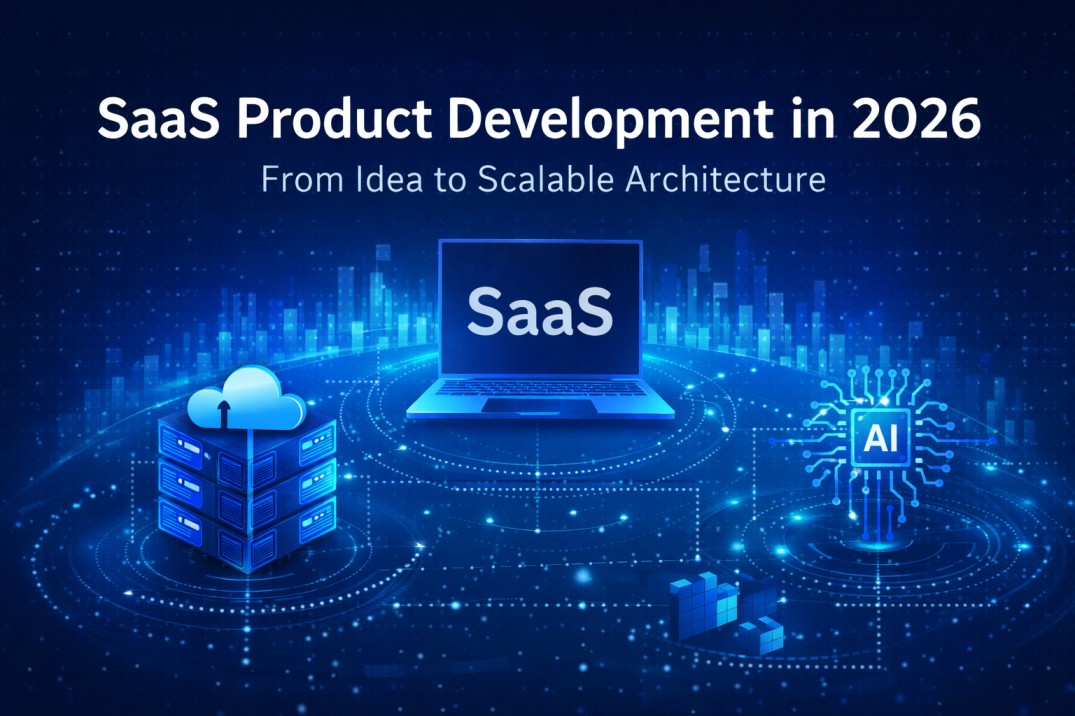
SaaS product development in 2026 is about building for scale after validation. This guide explains how to move from idea to scalable architecture without overengineering early.
Why SaaS Product Development Has Changed in 2026
Building a SaaS product has never been easier technically. Cloud platforms, managed databases, AI APIs, and modern frameworks allow small teams to ship fast. Yet, SaaS failure rates remain high.
The reason is not tooling. It’s sequencing.
Founders still try to design “the final system” too early. They think about scale, performance, and flexibility before proving demand, retention, or willingness to pay. In 2026, this approach is increasingly risky.
Investors want proof of usage, not architecture diagrams. Customers expect reliability, but they also tolerate imperfection if value is clear. Teams that survive are those that separate validation architecture from scaling architecture.
SaaS product development today is not a straight line from idea to scale. It is a staged process, and each stage has different architectural needs.
What SaaS Product Development Really Means in 2026
In 2026, SaaS product development is not just about writing code. It’s about designing systems that evolve safely.
At a high level, SaaS development now moves through four distinct phases:
- Idea and problem validation
- MVP and early traction
- Stabilization and repeatability
- Scale and optimization
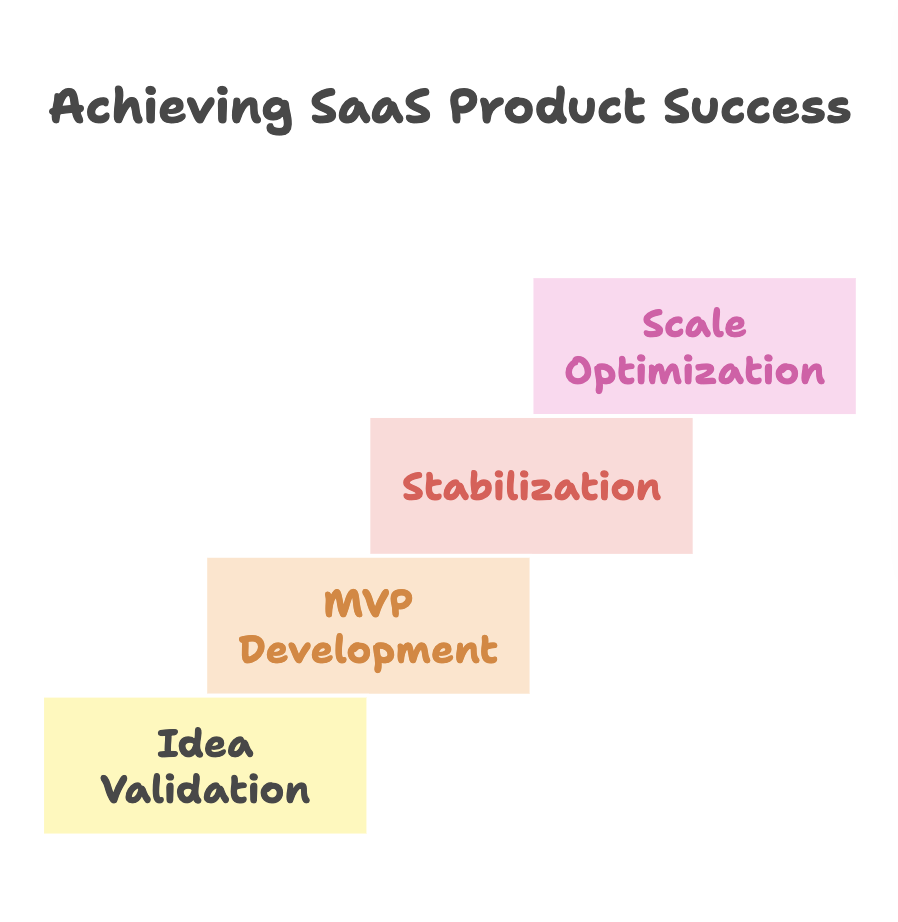
Each phase demands different technical decisions.
The mistake many teams make is skipping phases. They build scale-ready systems before proving traction, or they stay in MVP mode long after users demand reliability.
Good SaaS architecture grows with the product. It does not arrive fully formed.
Phase 1. From Idea to Problem Validation
Before any SaaS architecture discussion, one thing must be clear. What problem are you solving, and for whom?
In 2026, idea validation happens faster, but expectations are higher. Landing pages, waitlists, demos, and pilot programs are table stakes.
From a development perspective, this phase requires almost no permanent architecture.
Common approaches:
- No-code or low-code prototypes
- Clickable UI mockups
- Manual backends or spreadsheets
- AI-assisted workflows
The goal is not efficiency. The goal is learning.
If your SaaS idea cannot attract early users or pilot customers at this stage, no amount of backend scalability will fix it.
Phase 2. MVP Architecture for SaaS Products
Once there is early interest, teams move into MVP development. This is where many architectural mistakes happen.
What MVP architecture should optimize for
- Speed of iteration
- Ease of change
- Low operational overhead
- Clear separation of concerns
What MVP architecture should avoid
- Complex multi-tenant isolation
- Microservices without scale
- Over-generalized data models
- Premature performance optimization
In 2026, most SaaS MVPs use:
- A single backend service
- A relational database with clean schemas
- Role-based access only where necessary
- Simple deployment pipelines
This phase is about validating workflows, not future-proofing.
Handling Real-World Data Early in SaaS Products
One reason SaaS products fail after launch is poor handling of real-world data. User-generated content, documents, uploads, and inconsistent inputs appear very early.
If your SaaS depends on:
- invoices
- reports
- forms
- contracts
- PDFs or spreadsheets
you must validate this early.
A strong internal example of solving this problem is Noukha’s PDF AI case study, where document ingestion and structured extraction were tested before scaling the platform. This kind of early validation prevents architectural rewrites later.
Phase 3. Stabilization and Repeatability
Once users return consistently and workflows stabilize, architecture must mature.
This is the phase where SaaS teams often feel growing pains.
Signals you’ve entered this phase
- Users rely on the product daily
- Bugs impact revenue or trust
- Support volume increases
- Manual fixes become risky
Now architecture must support:
- Reliability
- Observability
- Controlled extensibility
Architectural upgrades that make sense here
- Background job processing
- Caching layers
- API versioning
- Improved access control
- Better logging and monitoring
Still, this is not the time for extreme scale. The goal is predictability, not maximum throughput.
Phase 4. Designing for Scalable SaaS Architecture
True scalability only matters once demand is proven.
In 2026, scalable SaaS architecture focuses on three things:
- Horizontal growth
- Operational resilience
- Cost efficiency at scale
Common scalable architecture patterns
- Modular services, not fragmented microservices
- Clear service boundaries around core domains
- Stateless application layers
- Managed infrastructure wherever possible
Multi-tenancy becomes a real concern here. But even then, many SaaS platforms succeed with shared databases and logical isolation long before needing physical separation.
Scaling too early increases cost and slows teams down.
Where AI Fits into SaaS Product Development in 2026
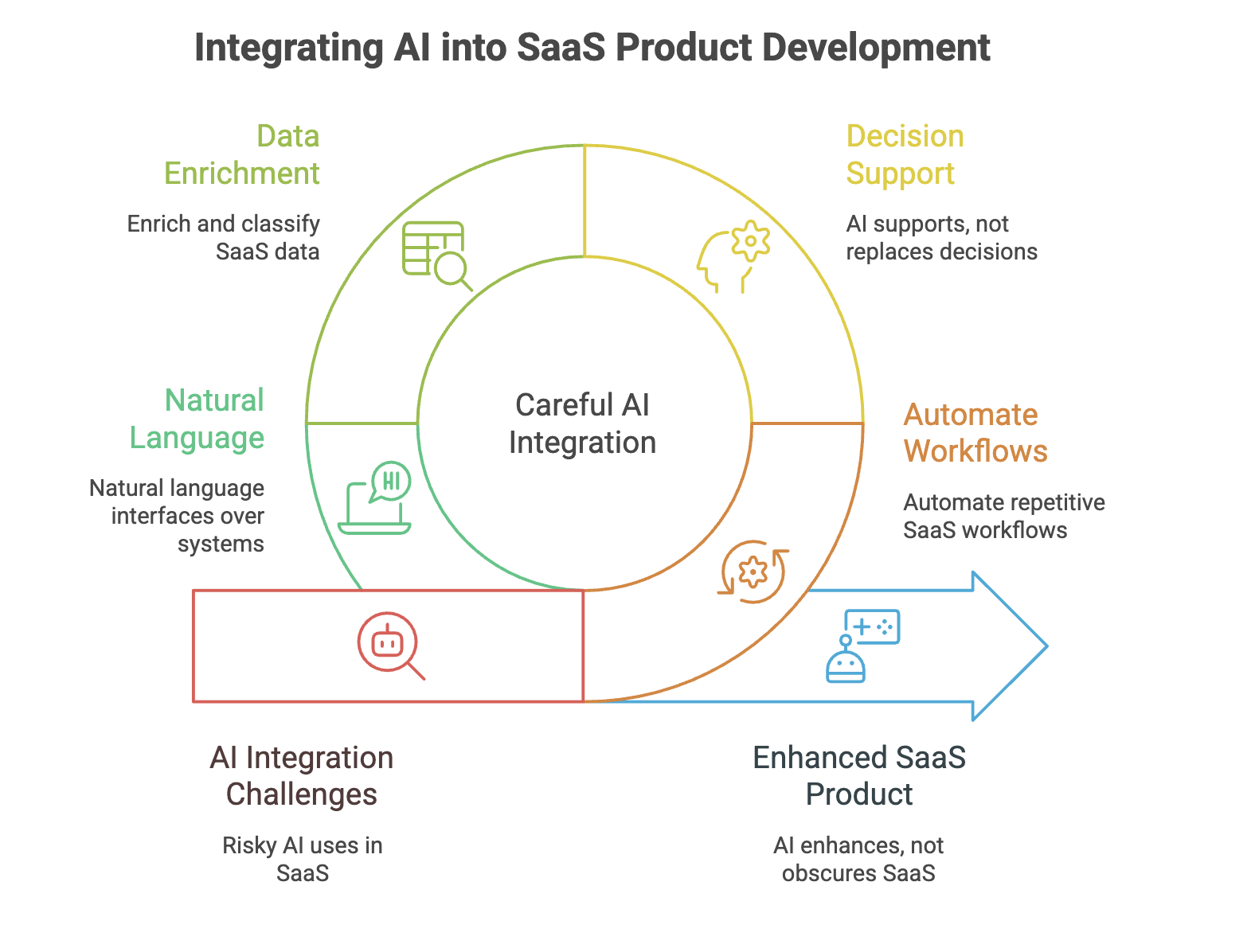
AI is now a core SaaS differentiator, but it must be integrated carefully.
Good uses of AI in SaaS:
- Automation of repetitive workflows
- Decision support, not decision replacement
- Data enrichment and classification
- Natural language interfaces over structured systems
Risky uses of AI:
- Core business logic without guardrails
- Financial or compliance decisions without auditability
- User-facing outputs without grounding
AI should enhance your SaaS, not obscure it.
Choosing the Right SaaS Development Partner
Building a SaaS product is not just a technical effort. It’s a product and execution challenge.
A good SaaS development partner helps by:
- Structuring development in phases
- Preventing overengineering
- Designing scalable but adaptable systems
- Supporting long-term evolution
If you’re planning a serious SaaS platform and want to avoid architectural dead ends, working with an experienced SaaS product development team can reduce long-term risk and cost.
Common Mistakes in SaaS Product Development
Even in 2026, these mistakes persist:
- Designing for every possible customer
- Treating early users like enterprise clients
- Ignoring operational costs
- Scaling infrastructure before scaling usage
- Confusing architectural complexity with maturity
Simplicity is still a competitive advantage.
A Practical SaaS Development Roadmap
Months 0–2. Validation
- Prove demand
- Validate workflows
- Avoid permanent architecture
Months 3–5. MVP
- Build core functionality
- Focus on usage metrics
- Accept manual processes
Months 6–9. Stabilization
- Improve reliability
- Add monitoring and controls
- Reduce operational risk
Months 9+. Scale
- Optimize performance
- Introduce modular services
- Invest in cost efficiency
This staged approach keeps teams focused and budgets under control.
Conclusion
SaaS product development in 2026 is not about building everything upfront. It’s about building what the current stage demands, then evolving safely.
Key takeaways:
- Validation comes before scalability
- Architecture should change as certainty increases
- Overengineering is still the fastest way to burn budget
- AI is a multiplier, not a shortcut
- Sustainable SaaS products grow in stages
If you were starting your SaaS today, which phase are you truly in right now?