
The idea behind future-proofing UK cities is to upgrade old systems, not to replace them, but to make them smarter and safer and more connected. UK councils, utilities and transport operators can have a sensible path to legacy integration to API-first AI, code refactor safely and towards composable architecture without disrupting daily services using AI-native software modernization.
What Is AI-Native Software Modernization?
AI-native software modernization implies implementing systems in such a way that AI is built into the system, rather than added afterwards.
In the case of UK legacy systems, the strategy is centered on lifecycle long-term learning, automation, and observability, including discovery and design through deployment, and operations.
Key elements include:
- Analysis of legacy data, code and dependencies with the help of AI.
- API-first, event-driven, and clean plug-in services and AI agents.
- Cloud-native infrastructure, able to scale to the city-wide demand and real-time use cases.
The Legacy Integration Importance to UK Cities
The vast majority of UK public-sector and enterprise systems continue to operate based on monoliths, mainframes, or closely-integrated middleware that was never intended to provide real-time data or open APIs or AI workloads.
The process of replacing and just ripping these cores is dangerous and costly, and therefore, legacy integration is the future between decades of business logic and new AI-native services.
Having the appropriate patterns of integration:
Critical services remain online and new AI services are implemented together with them.
The transport, utilities, planning, and citizen portals data can be safely and compliantly fed into AI models.
Strangler patterns and domain-based decomposition can be used to evolve city platforms by teams.
A City based on Composable Architecture and API-First AI
Composable architecture enables UK organisations to compose city platforms using modular capabilities, such as identity, billing, scheduling, inspections, which are provided through standard APIs.
This, along with API-first AI services, provides councils and businesses with an opportunity to test new AI potentials without modifying their systems.
In practice, this looks like:
Creating each new functionality as an infinitely deployable microservice that is only a few lines of code and is available to interact through REST or event-driven APIs.
Handling security, throttling and observability of both AI and non-AI workloads using API gateways and service meshes.
Using AI agents (to route, predict or detect anomalies) as API-first elements that can be replaced or improved when models change.
Advantages of AI coded Refactoring
Layering AI on top of legacy code opens the technical and business value of refactoring it to UK organizations. 
Contemporary AI agent is capable of scanning millions of lines of code, disenabling dependencies, and suggesting safe refactors without compromising the regulators and auditors of behavior.
The main advantages of refactoring an old code using AI layers are:
Accelerated modernization: AI has reduced modernization projects by years to months, by dramatically reducing the length of analysis and refactoring.
Reduced technical debt: Used code smells, dead code, and risky dependencies are auto-detected to enhance maintainability and performance.
Greater reliability: AI-based tests and predictive analytics help decrease the regression risk and enable the teams to identify problems before they strike citizens or customers.
Artificial Intelligence (AI) First-Mover Software Modernisation of UK Manufacturing
The UK manufacturing plants have a high usage of legacy MES, SCADA, and ERP systems, which are frequently linked by loosely connected point to point links.
The modernization of AI-native software in the context of UK manufacturing is aimed at introducing the intelligence, as opposed to connectivity, on top of those systems.
Manufacturers can:
Move time-series data into AI models that forecast downtime, optimize energy consumption, and maximize yield, through API-first AI services.
Isolate plant-specific logic and shared AI services with composable architecture to support quality, maintenance, and planning.
Slowly convert existing on-premise codebases and open secure APIs to cloud-native AI workloads in UK or EU regions.
Generative AI and Legacy Enterprise Software Upgrading
Generative AI makes legacy enterprise software upgrading faster by offering the generative AI to automated code analysis, documentation, and code transformation tasks that previously consumed the majority of the budget. 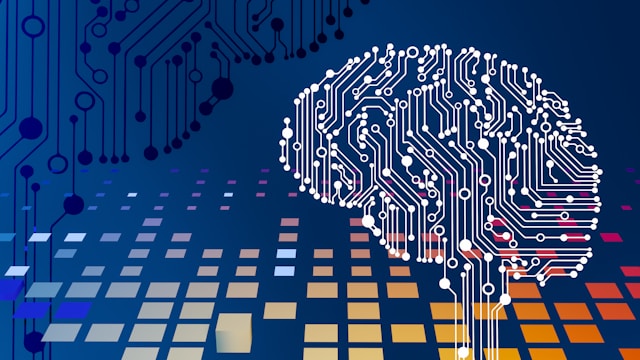
This allows UK teams to be business rule and security and user experience orientated, with AI agents taking care of boilerplate and migration scaffolds.
Typical use cases include:
Automatic test and migration stubs when transitioning between .NET Framework or Java monoliths and cloud-native stacks.
Creating API contracts and documentation that can be used to support API-first AI services in departments and suppliers.
Empowering developer, support, and city staff copilot-style tools to make their ticket response time shorter and enhance the citizen experience.
The eBay case illustrates why it is important to collaborate with an AI-Native Engineering Team.
The process of modernization has more to do with how to run model and mindset rather than with the tools.
Collaborating with an engineering partner who has experience with AI-first delivery, composable architecture, and cloud-native deployment will also allow UK organizations to stay out of one-off pilots and instead establish sustainable capability.
A strong partner will:
Develop a pragmatic roadmap that is a combination of legacy integration, code refactoring, and composable services in line with realistic city or enterprise results.
Create API-first AI services capable of supporting regulations, models, and vendor landscapes in the coming 10 years.
Deliver round-the-clock, observability, and after sales support to make modernization a regular habit and not a one-time project.
To be future-proof in the city, be it transport, housing, manufacturing, the UK organizations that are interested in the future will need AI-native software modernization, based on the legacy integration, code refactoring, composable architecture, and API-first AI is the way to be ambitious yet safe. Here is where one such expert collaborator as Noukha can assist you in modernizing without hesitation at a pace that your city or business requires.
FAQs
Q1. What is AI-native modernization of software?
The modernization of AI-native software is a strategy in which AI is integrated into system architecture and lifecycle, including discovery and design, deployment and operations.
Q2. What is the benefit of legacy integration to UK organizations?
Legacy integration enables the key systems to remain online as new components based on AI-native are added, minimizing risks and facilitating gradual change of the UK public and private sectors.
Q3. What do the advantages of refactoring legacy code using AI layers entail?
Its benefits are a better modernization, less technical debt, better test coverage, and more reliable deployments through the aid of AI and automated refactoring.
Q4. What is the significance of composable architecture to the cities?
Composable architecture enables councils and businesses to build city platforms using modular services, enabling them to more easily add new AI functionality and respond to policy or demand changes as well as change vendors.
Q5. What is the application of AI-native modernisation by UK manufacturers?
The manufacturers in the UK can feed operational data into AI models, open the factory systems to secure API exposures, and refactor plant applications over time without impacting production.