The AI software development is at the center of the flourishing technological industry in Canada with the innovative companies such as Noukha developing custom solutions that incorporate the use of artificial intelligence in the daily applications. Custom AI Development is sought by businesses in Toronto to Vancouver to remain competitive and convert complex data into insights and smooth user experiences. The increase in this is indicative of a larger trend in the direction of full AI-driven app development, wherein there are four major categories of AI software that actually result in actual change.
Learning about Custom AI Development in Canada
The AI ecosystem in Canada can be described as having strong governmental support, global research centers such as Mila in Montreal, and a pool of talent that is supported by university programs such as the University of Toronto. The applications of AI here are more practical implementation, e-commerce predictive analytics, or healthcare intelligent automation, and not merely hype. The local companies are more focused on the regulation, such as PIPEDA, and a safe and scalable implementation. An example is Noukha, which has offices in Canada, India, and the UK, providing AI/ML services with the ability to combine Docker and Kubernetes to create efficient cloud-native apps.
The companies that focus on AI within the software development sector focus on end-to-end: data strategy to model training and deployment. This strategy is appropriate in Canadian sectors such as the finance, retail, and logistics that have unique issues such as bilingual processing or extreme weather sensing on autonomous systems.
What are the 4 types of AI Software?
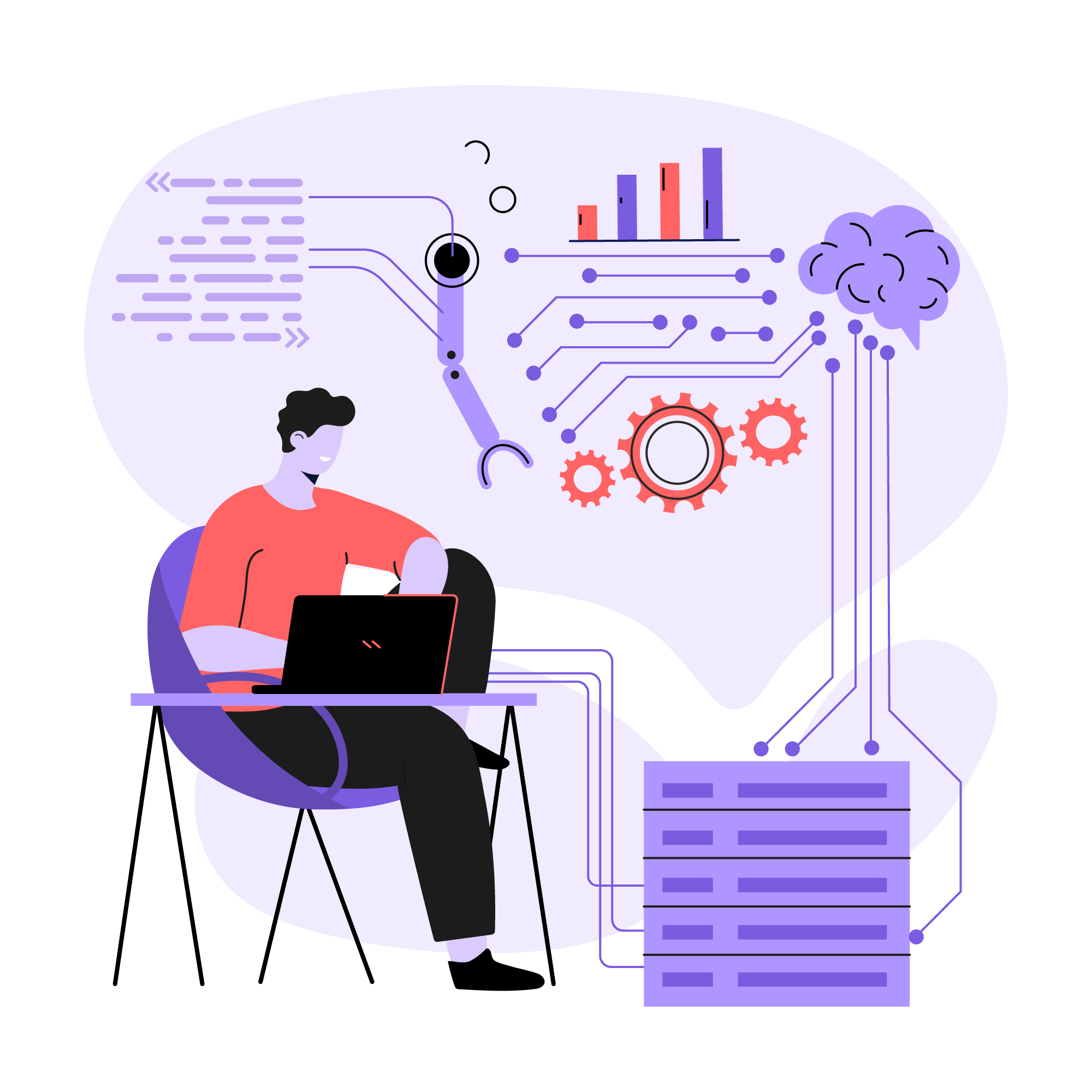
The question frequently cites categories based on functionality which drive contemporary tools. These are Machine Learning (ML), Natural Language Processing (NLP), Computer Vision, and Robotics- each of them changes the way apps work. In contrast to theoretical approaches such as reactive or self-aware AI, these practical ones are prevalent in the current AI software development. 
Machine Learning (ML): Systems do not have to be programmed to adhere to data patterns, which are good at predictions and suggestions. The ML is applied in the personalization engines of Netflix to understand the behavior of users.
Natural Language Processing (NLP): It is an area of study which enables machines to understand and generate human language and powers chatbots and translators. French-English bi-lingual applications perform well in Canadian markets.
Computer Vision: Processes visual information, such as facial recognition, or defect detection in a production line. Retail applications apply it to the visual search, which increases the rate of conversion.
Robotics: AI is used with physical systems in order to automate tasks, such as warehouse robots or surgical assistants. It is developing towards fleet management in logistics.
These categories tend to be similar; one application can have ML with predictions and NLP with voice interfaces.
The Future of Apps with Machine Learning
Machine learning alters apps by facilitating prescriptive features that are intuitive. Within the e-commerce industry, AI predicts the demand, thereby maximizing inventory and minimizing waste- advantages of AI in software development that save up to 20 percent. Retailers such as Shopify in Canada combine ML with dynamic pricing, adjusting to changes in the market in real-time.
Develop AI-based apps through ML begins with clean data inputs through neural networks or random forests. After training, they make decisions automatically like in fraud detection in banking applications, where anomalies generate alerts in real-time. It does not only accelerate activities but improves precision reducing human error in critical settings.
NLP in Practice
NLP transforms the interactions of users and makes applications interactive and available. Customer service applications Virtual assistants work 24/7 and address 70 percent of common problems without the need of human input. To Canadian companies, NLP will assist in multilingual support, which is essential in serving multilingual populations. 
Development NLP Artificial intelligence software development includes tokenization, sentiment analysis, and generative models such as Hugging Face. Apps are changing: imagine healthcare tools that transcribe doctor notes or legal apps that summarize contracts. The result? Increased satisfaction and quicker response, users interact more naturally through voice or text.
The use of Computer Vision in Modern Apps
Computer vision provides vision to software to analyze images and videos, gaining understanding. In the manufacturing sector, it identifies flaws in factory belts, reducing the quality management time by 40 percent. Agricultural applications use it to track the health of crops by drone shots to support sustainable farming in the prairies of Canada.
The use of AI to develop apps in this case involves the use of convolutional neural networks (CNNs) to detect objects. Retailing superstores use it as an augmented reality try-on e.g. virtual testers of make-up. This sort of technology enhances user experiences so that passive applications are made interactive and responsive like those that are sighted.
Automation and Scalability Robotics
Physical-digital hybrids are physically autonomized using robotics AI software, including warehouse pickers and delivery drones. It is used in logistics to maximize the route, reducing fuel consumption in an environment where the cost is increasing. Robotic process automation is used in order fulfillment by Canadian companies that supply food to customers, such as Noukha has been supporting.
Sensor fusion and making real-time decisions are necessitated in the integration of robotics. The advantages are continuous work and accuracy, which are crucial in such sectors as mining or healthcare robotics.
Advantages of Custom AI Development
Irrespective of the type, Custom AI Development is efficient: automated testing reduces bugs by 30 percent, code generation accelerates prototyping, and analytics refines iterations. Enterprises in Canada report shorter time to market and retention is enhanced by personalised features in the ROI.
Security is also enhanced since AI finds vulnerabilities in advance. Scalability next, and cloud-native designs will easily manage growth. In the case of startups, this implies smaller teams that specialize in innovation as opposed to grunt work.
Collaboration with an AI Software Development Company
By selecting an Custom AI development firm such as Noukha, one would be guaranteed of customized AI development that would be in line with the needs of Canada. They employ their full-stack teams to support anything as basic as MVP to scaling after launch, with technologies such as Python, React, and NextJS. Having successful experience with SaaS projects and AI agents, they are able to convert ideas into powerful applications.
FAQs
Q1. What are the 4 types of AI software?
These are four primary categories, which include Machine Learning, Natural Language Processing, Computer Vision, and Robotics, and each is applicable to particular app improvements.
Q2. What is the value of AI in software development to the business in Canada?
It enhances faster development, reduces expenses, increases precision, and personalizes to make firms compete in the global arena.
Q3. Why is custom AI development necessary with apps?
It adapts AI to specific data and requirements, making it scalable, compliant, and outperforming generic tools.
Q4. Do small businesses in Canada have an opportunity to develop apps using AI?
Yes, even startups have enterprise results with the help of available cloud platforms and partners that provide flexible models.
Q5. What is the duration of the AI-based app development?
To scale to full products, MVPs take 3-6 months with more complex products taking 6-12 months.