
The current UK AI regulation environment calls not only for ad-hoc controls but also for systematic, transparent, and data protection and security standards-based AI governance of software development. In the case of UK-based organisations and international companies with users in the UK, collaborating with a governance-driven, engineering team such as Noukha Technologies assists in transforming regulations into safe, scaled AI products that endear users to the service and meets enterprise buyer requirements.
The Real Implications of the UK AI Act on Teams
Though the UK has not yet passed a single, EU-style AI Act, it is implementing a principles-based framework that uses existing regulators to enforce AI use across sectors. 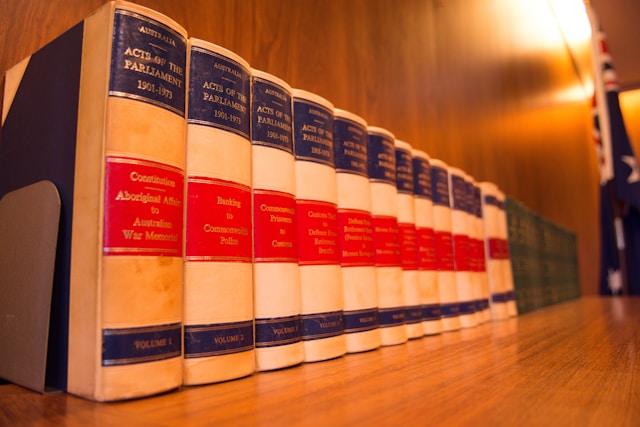 These regulators are supposed to have the core principles such as safety and robustness, proper transparency and explainability, fairness, accountability and governance, and contestability and redress.
In the case of software development teams, this is translated into:
Securing purpose, data sources and limitations of AI systems in writing to be able to explain decisions to the regulators, enterprise clients, and end-users.
Incorporating risk evaluation, human supervision and escalation steps into the design of a product, rather than as an add-on to the design at the end.
Responsible AI in Software Delivery Foundations
Responsible AI extends beyond ethics decks into the field of day-to-day engineering, with implications on the design of models, training, testing, and monitoring in production. Responsible AI can turn governance into approvals, partnerships, and trust between customers when executed appropriately.
Key foundations include:
Clear policies to be fair, reduce bias, and acceptable use, converted into design patterns and code standards that the engineers can use in respective sprints.
Constant checking of the model behaviour, including notifying about drift or other anomalous behaviour, and providing playbooks as an indication of how to fix it.
Bringing AI Governance to SDLC
In order to ensure the AI governance of software development is sustainable, the controls should be built into the software development lifecycle (SDLC) as opposed to considering them as a separate compliance stream. 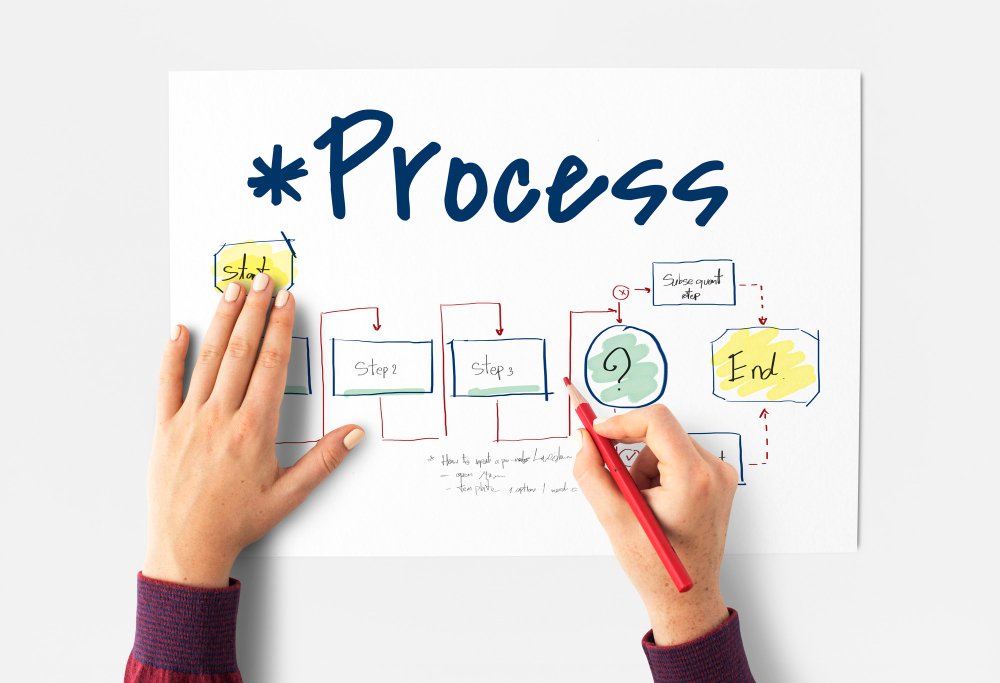 The UK organisations are becoming more demanding of vendors to present audit-ready AI development systems that integrate requirements, testing and approvals.
Practical tactics include:
Knowledge discovery and design which concerns governance: The data flows, model decisions, as well as risk levels are represented in architecture drawings and requirements.
SDLC gateways at governance levels, where the data protection, security, and explainability are structured through checklists prior to a significant release or deployment into production.
Guaranteed LLM Integration and Data Security
Secure LLM integration now has become the centre of AI risk discourse, particularly when personal, financial, or commercially-sensitive data is accessible to the models. GDPR compliance requirements on AI and SOC2 compliance requirements require organisations to demonstrate strong technical controls and detailed processes concerning AI workloads.
Best practices of a safe integration of LLM:
Using data minimisation, role based access and encryption such that only required, well-protected data is available to the model, extensive logs are made of who accessed what and when.
Maintaining audit logs of prompts, responses, fine-tuning data sets, and model versions, supporting audit-friendly AI development frameworks on various platforms.
The Proposal to Adopt AI Governance in Fintech Software Development
Fintech is placed at the nexus of financial regulation, data protection, and AI risk, and thus governance is particularly important. The application of AI governance in software development in the case of fintech involves the use of a robust set of algorithms, explanatory decisioning, strong security and compliance baselines in equal part.
The areas of focus by fintech teams must include:
Formal model risk management, which is a written account of how AI systems aid credit scoring, fraud detection, and transaction monitoring, and in which human-in-the-loop oversight is required.
The alignment of cross-border requirements where AI software could be required by the laws of the UK and Canada is to be reconciled in a single control framework of cloud platforms, data residency and third-party integrations.
How to make Your AI Stack Audit-Ready
Frameworks of AI development that are audit-ready provide organisations with one source of truth regarding policies and decisions as well as details of implementation. They also facilitate procurement since giant customers are increasingly evaluating AI governance posture and technical fit and prices.
Key elements include:
A core location to which AI inventories, DPIAs, model cards, test reports, and risk evaluation are aligned against GDPR, SOC2, and internal policy mandates.
Periodic internal AI system reviews against recorded principles, remediation items being monitored and prioritised as in other engineering work.
The importance of the Governance-First Approach of Noukha
In the case of UK companies, the shortest path to compliant, scalable AI is collaborating with engineering partners that view governance, security and Responsible AI as a core discipline as opposed to a luxury. Noukha is also a custom software and AI development firm with teams in the UK, India, and Canada and brings together AI/ML expertise, secure patterns of LLM integration, and audit-ready engineering practices to assist organisations to operationalise AI governance through software development in fintech, SaaS, and enterprise structures.
A governance-first partner such as Noukha Technologies would be able to:
Creates SOC2-enabled, GDPR-compliant, and UK and Canada-specific AI software-oriented application architectures, design and development AI and LLM-based products, and logs with secure monitoring.
Keep continually enhancing policies, controls and documentation such that platforms are always up to date as the UK guidance, sector regulations, and global AI requirements change.
FAQs
Q1. What is software development AI governance?
The term AI governance in software development defines the framework of the policies, roles, and controls that determine the way AI systems are developed, constructed, deployed, and monitored to remain ethically, legally, and safely.
Q2. Is there an AI Act in the UK that is similar to EU?
At the moment, the UK lacks an equivalent EU-style AI Act: it depends on the regulators and authorities to use the core AI principles of safety, transparency, and accountability to regulate various sectors.
Q3. What is the significance of Responsible AI to UK businesses?
Responsible AI helps to mitigate the risk of regulation, enhance user and stakeholder trust, and enable long-term innovation by increasing the transparency, resilience, and alignment of AI systems to societal expectations.
Q4. What implications does GDPR and SOC2 have on AI systems?
GDPR defines regulations on the collection, processing, and storage of personal data in AI workloads, whereas SOC2 regulations are concerned with securing, ensuring, and maintaining integrity and confidentiality and privacy of service providers.
Q5. Which are the legal prerequisites of AI software in UK and Canada?
The UK and Canada have legal mandates of AI software revolving around privacy, security, and consumer protection, and AI-related expectations are formed by guidance, industry-specific regulations, and new regulatory projects.