
The modern digitalized environment is fast-moving, and one of the first interactions your potential customers might have with your brand is a webpage. An inappropriately designed site may damage credibility, reduce conversions, and push people to rivals. When you are a business owner, and you want to revamp your online presence, a planned site redesign is your key to better traffic, conversions, and user experience.
The given guide will also take you through all stages of a website redesign process, such as planning and optimization of the post-launch process.
The Importance of Website Redesign to Business Owners
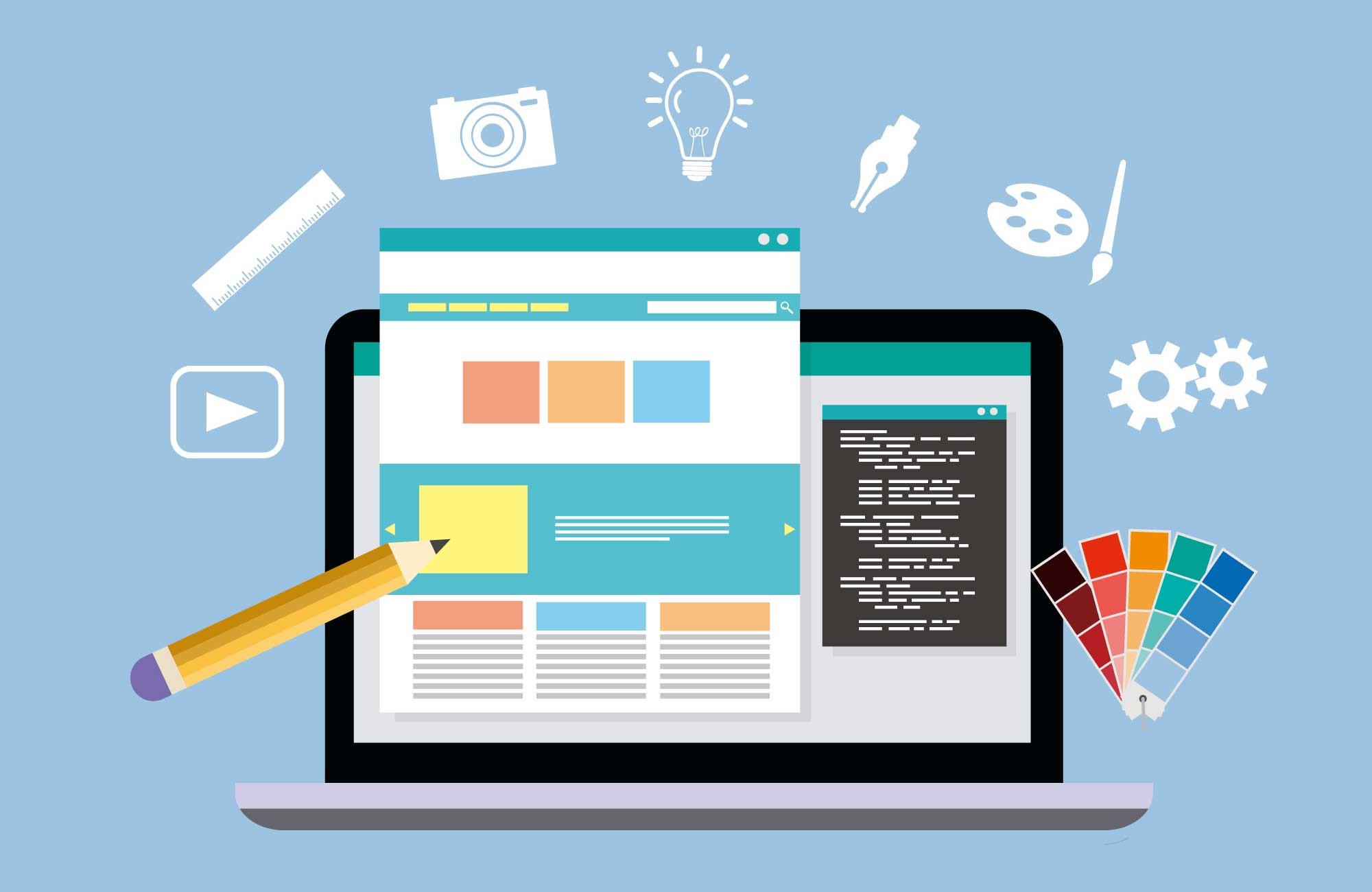
Website redesign does not simply focus on the appearance. It is all about building a functional, user friendly, and conversion oriented design that is a representation of your brand and customer requirements. Key benefits include:
Improved user experience (UX) – improved navigation, mobile friendliness and reduced page loading times.
Increased search engine positions – optimized information, internal links, and adequate SEO bases increase organic traffic.
More conversions – better layout, placements of the CTAs, and optimized user journeys work towards more leads and sales.
Brand consistency – an integrated visual design will convey reliability and professionalism.
Indications that Your Business requires a Website Redesign
Ask yourself:Prior to committing time and resources, determine whether your website exhibits the following signs:
Inconsistent design – When your website is old or it fails to represent your recent brand, then it needs a new appearance.
Poor user experience – Poor bouncing, poor navigation or poor dwell time are all indicative of UX problems.
Lack of performance issues – Page loading slowness or technical malfunctions lower the interaction.
Decreasing measures – Falls in leads, traffic or poor conversion rates are warning signals.
Security bugs – Old or expired code, or the lack of a security certificate, can endanger users.
Step 1: Understand Goals and Stakeholder Needs
The initial phase toward successful website redesign is to set clear goals. Ask yourself:
- What are the business results that the redesign is to accomplish?
- Who are the target customers or the main audiences?
- What are the existing pain areas in user experience?
- What are the characteristics of must-haves and nice-to-haves?
- What will be used to measure success after launch?
Stakeholder expectations of the documents and align them with the quantifiable objectives such as increase in traffic, increase in conversions, or enhancements.
Step 2: Examine Your Current Website Performance
Knowing the current performance of your site will assist in knowing what is good and what is not. Key metrics to track include:
- The number of visits and sessions.
- Bounce rate and dwell time
- Best performing pages and keywords.
- Rates of conversion (the number of forms filled in, sales, downloads)
- Domain authority and search engine optimization.
This is the baseline information that will inform you in your website redesign strategy and reduce the chances of losing quality traffic or leads.
Step 3: Set Your Redesign Goals
The objectives of your business must be in line with your goals of redesigning your website. Common goals include:
Revamp Website appearance and feel – revise graphics, fonts, and colors with current trends.
Improve user experience – make it easier to navigate, decrease friction, and make it more mobile-responsive.
Increase traffic to the site – use the best SEO strategies and refresh the content so that it can attract more visitors.
Optimize conversions – make CTAs, forms and purchase flows more efficient.

Step 4: Map out your website structure
A well-structured hierarchy of the web site is to make sure that the information required by the visitors is readily available and enhances search optimization. Steps include:
Make a sitemap – make pages logical and make related content into groups.
Create wireframes – describe the layout of important pages to see how to place the content.
Determine internal links – relate similar pages to enhance topicality and ranking.
Step 5: Design Your Website
Focus on User Experience
Have good navigation and reduce clicks to major content.
Streamline the forms and Call-to-Action.
Give visual feedback and hover effects and microinteractions.
Visual Design Principles
Color palette: Select colors that are representative of your brand personality.
Typography: Make it readable across the devices.
Imagery: High quality images and graphics can be used to complement messaging.
Accessibility: Be well contrasted, alt-texted, and mobile-friendly.
Prototype and Test
Prior to development, develop interactive prototypes to ensure design, user flow and responsiveness across devices. Carry out usability testing on actual people to determine areas of friction.
Step 6: Develop and Test
Development entails putting the ideas in the designs into a working web site. Steps include:
- Code-mining – determine which or which not to keep.
- Add new features – make sure that there is seamless backend functionality.
- Test, test, test, forms, links, responsiveness and speed.
The Usability testing guarantees that the website functions as desired by the visitors and avoids the post launch mistakes that are expensive.
Step 7: Launch and Monitor
Pre-launch Checklist
- Test the website and then substitute the live site.
- Inform the stakeholders and customers on the impending launch.
- Give grace period where feasible so that users have time to change.
Post-launch Monitoring
Monitor the key measures to make sure the redesign achieves its goals:
- Traffic sources
- User interactions
- Conversion rates
- SEO rankings
Depending on real-world performance, modify content, structure or design items accordingly.
Step 8: Optimize Post-Launch
Website redesigning is never exhaustive. Periodically assess:
- Website speed and interaction.
- Lead quality and conversion rates.
- Relevancy of content and optimization of search engines.
The continuous optimization process will ensure that your website remains competitive and in line with the changing business objectives.
Best Practices of Search Engine Optimization on your Website Redesign
Make on-page optimization – include subheadings, bullet points, and skimmable text.
Share rich media – use images, videos, and charts to improve the interest.
Posting of keywords – use keywords naturally in post title, headings as well as content.
Internal connection – interrelated pages to create topic authority.
Redirection of old URLs – retain the SEO with 301 redirects.
Search engines – optimize search to the AI – brand presence to soar in AI search engines.
Choosing the Right Development Partner
 Whether you’re considering website development in India, website development in Coimbatore, or website developers in the USA, the key is finding a team that understands your market and objectives.
At Noukha, we specialize in creating websites that don’t just look great—they perform. Whether you need modern website design services or comprehensive digital transformation, we’re here to help you build a website that works as hard as you do.
Your customers are already searching for solutions you provide. Make sure they find a website that converts them into loyal clients.
FAQs
Q1: How frequently should I redesign my website?
Conversions decline, or you change your business purposes, approximately every 2-4 years (assuming your design is not outdated).
Q2: Will redesigning have an impact on my SEO?
Yes, it can, but with the right planning, on-page optimization and 301 redirects; you can retain or even increase your rankings.
Q3: What is the duration of a redesign of a website?
Small- to medium-scale sites will take between 8 and 16 weeks, depending on the complexity, and more time at the enterprise level.
Q4: How much does a professional redesign of a site cost?
Costs are different according to the scope, complexity, design, and development requirements. One should have a reasonable budget at the outset.