
AI Inference Optimization is swiftly turning into the speediest, most dependable stick to lower runaway cloud bills on global AI applications in the USA, particularly when the utilization is measured in millions of users and requests. Tuning inference, rather than training, is the new ROI of product leaders, CTOs, and founders operating with partners such as Noukha on cost-effective AI software development strategies.
Why the Cost of Inference Blows First
The cost of inferring at scale with AI has become more costly to train than to train many enterprise workloads. With models stabilizing, most of the spend changes to production traffic: each chat message or recommendation, or API call, becomes a line item on your cloud bill.
The global application cost drivers in the USA are:
- Low-latency, high-frequency requests to endpoints backed by GPUs 24/7.
- Just in case there is a traffic spike, over-provisioned clusters will be made.
- Big models where Small Language Models (SLMs) would have worked.
This is the point at which AI inference optimization opens the door to the quantifiable ROI without negatively influencing the user experience.
Small Language Models (SLMs) ROI Case
Small Language Models (SLMs) are designed with the purpose of providing high-performance in terms of tasks with significantly reduced compute requirements compared to LLMs. 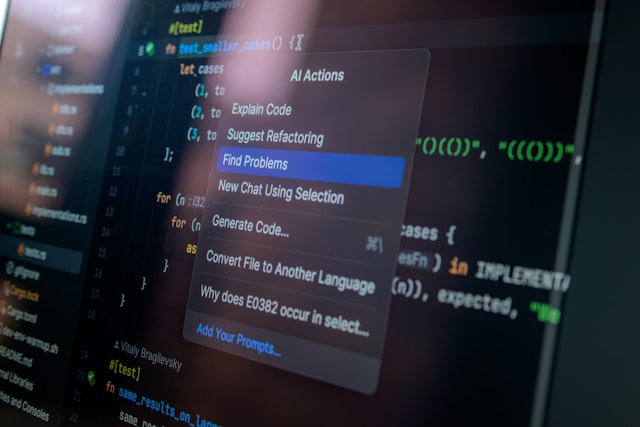 Rather than buy huge general purpose models to cover all functionality, SLMs enable you to make intelligence as right size to the task and traffic characteristics.
How SLMs improve ROI:
Reduced graphical processing unit needs: A significant number of SLMs can be executed on a single GPU or even CPU, reducing the cost per request.
Increased throughput per node:Fewer nodes imply increased requests in the instance, and utilization is increased.
More suitable to edge or hybrid deployments, lowering the cost of cross-region networks to global users.
In startups, optimization of AI inference typically begins with a simple swap of generic LLM endpoints with domain-tuned SLMs in support, search or workflow automation streams.
MLOps, GPU Scaling, and Cloud Cost Management
How to lower enterprise AI cloud costs in 2026 is not about more GPUs but smarter GPU scaling and MLOps discipline. Autoscaling that is poorly tuned, idle GPUs, and pipelines that make a noise can be silently eating up most of your AI budget.
Scaling strategies of global applications in the USA via GPUs:
Rightsize: SLMs should use smaller, workload-suited GPU SKUs rather than default to high-end accelerators.
Mix pricing models: Mix spot/preemptible instances of batch inference and reserved or committed use of predictable traffic.
Latency-aware routing: Distribute regional inference endpoints to closer major U.S. user hubs to decrease over-provisioning to worst-case latency.
Cloud cost management and MLOps hand:
Similar to observability, work in one place: Visualize Latency, error rates, and cost per 1000 requests together.
Experimentation that is cost conscious: Experimentation Cost per inference is a first class metric, and is a characteristic that should be taken into account when testing new models or architectures.
FinOps practices: Tag AI workloads, spend by team or product, and enforce experimentation environment budgets.
End-to-end partners, such as Noukha, can introduce these GPU scaling and MLOps patterns into your architecture at the original design, rather than having them hit a spike on the bills.
Patterns of cost-effective AI software development.
The strategies of developing AI software that are cost-effective do not involve compromising corners but rather designing to ensure costs are not used upon the initial line of code. Enterprise and startup teams in the USA are characterized by a few high-ROI patterns.
High-impact design patterns:
Tiered model routing: Forward basic queries to SLMs and book more complicated models on complicated tasks, reducing average inference cost.
Batch and async: Use batch non-urgent tasks (e.g. analytics, bulk document processing) to utilize the maximum number of GPUs.
Edge and on-prem inference: Where extremely high-throughput is required, constant cloud burst may be more expensive than running SLMs on dedicated or on-prem GPUs.
Model compression: Compress models with quantization, pruning, and distillation to enhance throughput and reduce latency.
Noukha-style product engineering, an integration of MLOps, cloud-native stacks, and post-launch optimization, enables enterprises to iterate rapidly while ever-improving cost per inference with traffic growth.
An AI inference optimization Simple ROI Framework
In order to turn AI inference optimization into a conversation at the board level, the teams should have a clear method of discussing ROI, rather than the technical tuning. The simplest structure is: 
Specify baselines: Existing cost per 1,000 inferences, latency average and error rates.
Determine levers: SLM implementation, scaling of GPU, routing policies, and compression of models.
Run controlled experiments: Run one optimization at a time and monitor its effects on cost and user experience.
Since AI cloud price in 2026 will escalate at a higher rate than most CFOs predict, business firms that industrialize this attitude will have an opportunity to globalize AI applications in the USA without compromising the profit margins. A technology partner that specializes in optimizing AI inference and managing the cost of cloud computing will be sure that these benefits will pay off over time, not only in a series of one-off cost-cutting spurts.
The ongoing optimization of AI inference, regularly revisited, notably due to the emergence of new Small Language Models (SLMs), GPU scaling capabilities, and MLOps tooling, will ensure that your AI products remain competitive and viable.
FAQs
Q1. What is AI inference optimization and how does it matter in 2026?
The idea of minimizing the latency and infrastructure cost to serve trained models in production without compromising the accuracy is called AI inference optimization. It is relevant in 2026 since inference is becoming the biggest portion of AI compute spending by numerous businesses.
Q2. What can Small Language Models (SLMs) do to reduce my AI cloud bill?
SLMs have lower parameters and lighter architectures, resulting in the use of less GPU memory and fewer compute per request. This allows teams to use more traffic per node and in fact execute some workloads on less expensive hardware, reducing the per-inference cost.
Q3. What is the role of MLOps in cloud cost management?
MLOps offers the tooling and processes needed to version, deploy, monitor and rollback models on a large scale, which are necessary at the scale of safe cost-oriented experimentation. It also allows following cost, performance, and reliability indicators throughout the model lifecycle to be able to make informed tradeoffs.
Q4. What does a partner such as Noukha do to assist in optimization of AI inference?
An expert in engineering can develop architectures that incorporate SLMs, GPU scaling and MLOps at the outset rather than augment cost controls later. They also may run on-going optimization loops, workload profiling, new models experimentation, and infrastructure optimization, to ensure that ROI continues to increase with your increase in AI usage.