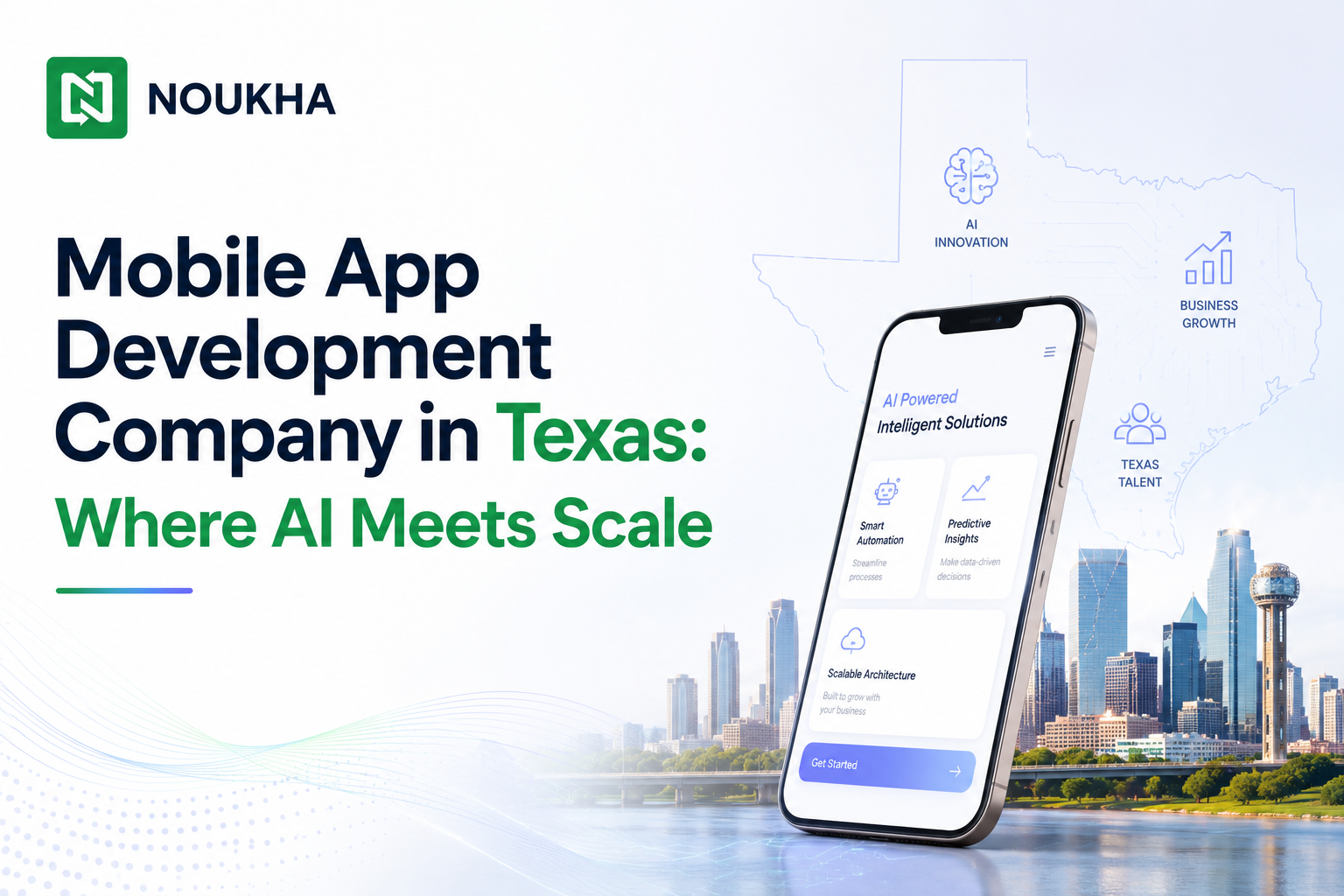
Texas has become one of the strongest technology markets in America, with growing demand for scalable mobile apps and AI-driven products. If you are looking for a mobile app development company in Texas, you are entering a market that is growing faster than almost anywhere else in the country. Texas added the most new tech workers of any US state in 2025, and its cities now compete directly with the traditional coastal hubs. For businesses building mobile products, this shift creates both opportunity and pressure.
The opportunity is access to engineering talent, lower operating costs, and a business-friendly climate. The pressure is scale. Texas industries such as energy, healthcare, fintech, and logistics move enormous volumes of data and serve large user bases. A mobile app built for these markets cannot just look good in a demo. It has to perform under real load, and increasingly it has to be intelligent. This is where artificial intelligence and scale meet, and it is the heart of what a modern Texas app partner must deliver.
Why Texas Became a Mobile and AI Powerhouse
Several forces pushed Texas to the front of the technology map. Zero state income tax lets companies offer strong pay without inflating budgets. Lower operating costs give startups a longer runway. Major firms moved operations to the state, bringing suppliers, partners, and talent with them. State support added fuel, including a semiconductor fund worth roughly 1.4 billion dollars that strengthens the hardware and AI supply chain across the region.
The result is a multi-city ecosystem, and each city has its own character. Austin, often called Silicon Hills, leads in startups, consumer tech, and semiconductors. Dallas is strong in enterprise software, fintech, and telecom. Houston builds on energy technology, life sciences, and the world’s largest medical center. San Antonio focuses on cybersecurity and defense. This spread makes the state resilient, because it does not depend on a single sector or a single city to keep growing.
What Scale Really Means for a Texas Mobile App
Scale is an overused word, so it helps to define it clearly. Scale means your app keeps working when users, data, and transactions grow by ten or a hundred times. Many apps feel fast with a hundred users and then collapse with a hundred thousand. Building for scale from day one avoids that painful and costly rebuild later.
Architecture That Grows with You
A scalable mobile app rests on a strong backend. That includes cloud infrastructure that can add capacity on demand, databases that handle heavy read and write traffic, and clean separation between services so one failure does not take down the whole system. A capable mobile app development company in Texas plans this structure before writing feature code, because retrofitting scale later is slow, risky, and expensive.
Good architecture also protects your budget. When services are built in a modular way, you can grow the parts that need more power without paying to scale the whole system. This keeps hosting costs sensible as your user base climbs. It also lets your team ship new features faster, because they can work on one module without breaking another. For a growing Texas business, that speed can be the difference between leading a market and chasing it.
Performance Under Real Load
Texas businesses often serve customers across a huge geography. An energy field app, a hospital app, or a logistics app may run in areas with weak connectivity. Strong engineering handles this with offline support, smart caching, and efficient data sync. These often-overlooked technical details determine whether an app is embraced or abandoned once it reaches the field.
Where AI Meets Scale in Modern Mobile Apps
The newest shift in Texas app development is intelligence built directly into the product. Users now expect apps that predict, personalize, and assist. Adding these features well requires the skills of a specialist ai app development company in usa that understands both mobile engineering and machine learning at the same time.
Personalization That Feels Native
AI can tailor an app to each user, showing the right content, the right products, or the right next action. Done well, this raises engagement and keeps people coming back. Done poorly, it feels intrusive or slow. The right partner balances personalization with speed and privacy, so the experience helps the user rather than unsettling them.
On Device and Cloud Intelligence
Some AI features run best on the phone itself, such as image recognition or voice processing, because this protects privacy and works even without a signal. Other features run in the cloud, where larger models live and where heavier computing is possible. A skilled team decides which approach fits each feature, then builds a clean bridge between the two. This hybrid design is quickly becoming the standard for serious mobile products.
Automation for Texas Industries
AI also automates work behind the screen. A logistics app can predict delays and reroute drivers. A healthcare app can flag unusual results for a human to review. A fintech app can spot fraud in real time. These use cases show how AI and scale reinforce each other, because more data makes the intelligence sharper and more valuable over time.
The business benefit is straightforward. Automation removes slow manual steps, cuts errors, and lets your team handle far more volume without adding headcount. For fast-growing Texas companies, this is often the clearest path to a strong return on the app investment. The apps that win are the ones that quietly save time for both the customer and the business on every single use.
Industries Driving Mobile App Demand in Texas
Demand for mobile apps in Texas is not spread evenly across the state. Energy and industrial firms need field apps that work in remote sites and handle sensor data. Healthcare organizations, anchored by Houston’s medical center, need secure apps for patients and staff that respect strict privacy rules. Fintech companies in Dallas need fast, safe apps that handle money and identity with care. Retail and logistics firms need apps that track orders and inventory across a large territory. Each sector has its own rules, its own data, and its own definition of success, so a strong partner adapts its approach rather than copying one template for everyone.
How to Choose the Right Texas App Development Partner
Picking a partner is the most important decision in your project. A clear checklist protects you from costly mistakes. Start by asking to see live apps the team has shipped, not just mock-ups. Look for direct experience in your specific industry, since a healthcare build differs greatly from a retail build. Confirm that the team plans for scale and security from the start, not as a late add-on. Ask how they handle AI features, including data privacy and model accuracy. Finally, confirm that you will own the code, so you are never locked to one vendor.
Communication Matters as Much as Skill
It also helps to look at how the team communicates. Time zones, response speed, and clear reporting matter as much as raw technical ability. A partner who explains trade-offs in plain language will serve you better than one who hides behind jargon. The goal is a working product and a smooth process, not just a signed contract and a hopeful start.
The Cost and Timeline Reality
Buyers always want a fixed number, but honest app pricing depends on features, platforms, design, and complexity. A simple app costs far less than an enterprise platform with AI and heavy integrations. The smart approach is to start with a clear scope and a minimum viable product that proves value in the market. This keeps early spending controlled and gives you real user feedback before you invest in the full build.
Timelines follow the same logic. A focused first version can reach users in a few months, while a large-scale platform with AI and compliance work takes longer. Tying payment to delivered milestones keeps risk low, because you fund work that you can see and test rather than work that is merely promised. A good partner will also flag hidden costs early, such as app store fees, third-party services, and ongoing maintenance, so your budget reflects the full picture from the start.
It is worth remembering that the launch is the beginning, not the end. A serious mobile product needs updates, security patches, and new features as your users grow. Planning for that support from day one protects your investment and keeps the app healthy for years. The cheapest quote is rarely the cheapest project once you count the cost of rework and downtime.
Build a Texas App That Scales with Intelligence
Texas offers a rare mix of talent, cost advantage, and momentum, which is why so many companies now choose to build here. But the state’s biggest industries demand apps that scale under real load and grow smarter with AI over time. Meeting that bar takes a partner who understands architecture, machine learning, and the specific needs of Texas markets.
If you are planning a mobile product for the Texas market and want it built to scale from day one, a short discovery call is the most useful place to begin. You can contact us to walk through your idea, your target users, and the intelligence you want inside your app. Come with your toughest questions, weigh your options carefully, and pick the team that engineers for growth rather than for the launch photo.
Noukha Technologies | You Name It, We Develop It