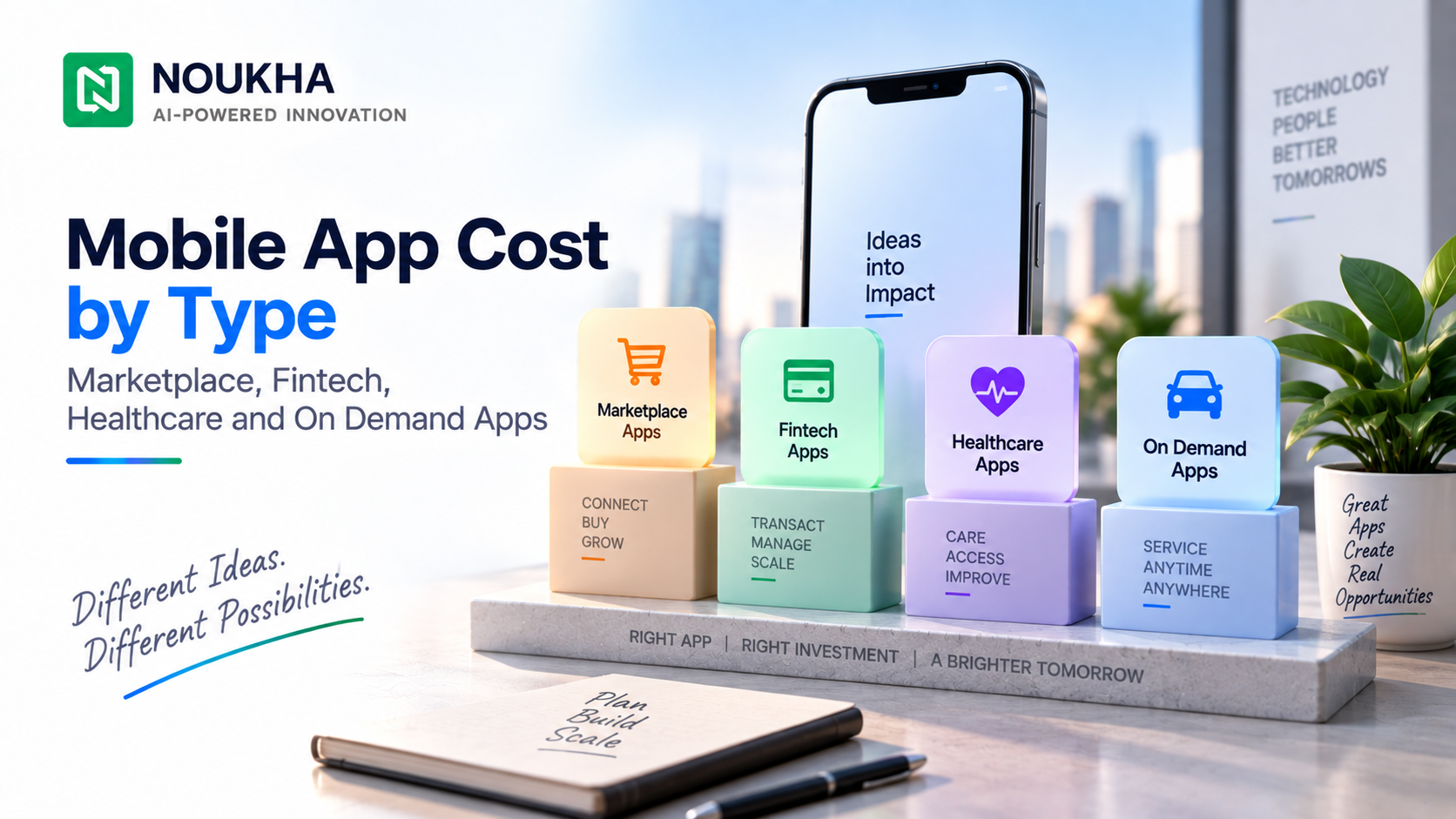
Mobile App Cost by Type Marketplace Fintech Healthcare and On Demand Apps
App type changes cost because it changes the number of user roles, money flows, data sensitivity, integrations and operating workflows the product must support. A simple content app and a marketplace may have similar screen counts but very different backend, security and support requirements.
The most useful estimate starts with the business model. Define who uses the product, what transaction or outcome it enables, what can fail and who resolves that failure. The sections below compare four common models without presenting false fixed prices. Actual budgets depend on scope, quality standards, delivery team and regulatory context.
Cost drivers shared by every app type
- Number of user roles and permissions
- Native iOS Android or cross platform delivery
- Backend services and administrative tools
- Third party integrations and usage charges
- Data sensitivity security and compliance
- Offline behavior and background processing
- Testing device coverage and accessibility
- Monitoring support and release frequency
An estimate should state assumptions for each driver. Two vendors may quote different amounts because one includes admin tools, security testing and post launch support while the other estimates only the mobile interface.
Marketplace app costs
A marketplace connects at least two participant groups, such as buyers and sellers, guests and hosts, or customers and service providers. Cost grows because the product needs separate onboarding, profiles, search, listing management, transactions, communication and dispute handling.
Marketplace features that affect the estimate
- Seller or provider verification
- Catalog listings media and moderation
- Search filters recommendations and location
- Payments commissions refunds and payouts
- Ratings reviews messaging and disputes
- Admin tools for risk support and marketplace health
Payments are more complex when the platform splits money, delays payouts or manages refunds between parties. Search quality and moderation also become operating systems rather than single features. A marketplace minimum viable product should test liquidity and transaction completion before investing in advanced recommendations.
Fintech app costs
Fintech applications carry higher assurance requirements because errors can affect money, identity and regulatory obligations. Even when a licensed provider handles core financial services, the app must manage authentication, consent, transaction states, auditability and failure recovery carefully.
Fintech features that affect the estimate
- Identity verification and account recovery
- Bank payment or brokerage integrations
- Transaction ledger and reconciliation
- Fraud controls alerts and manual review
- Encryption audit logs and restricted administration
- Compliance reporting and evidence retention
Payment card data can bring systems into scope for PCI DSS, which defines requirements for environments that store, process or transmit payment account data. Product architecture can reduce exposure by using appropriate payment providers and tokenized flows, but the exact responsibility must be assessed for the chosen implementation.
Organizations planning a US product can review Noukha’s mobile app development company in USA page and the dedicated mobile app development cost in USA resource.
Healthcare app costs
Healthcare cost depends on whether the app is a general wellness product, a patient service, a provider workflow or part of a regulated medical function. The type of data and the relationship between the developer, healthcare organization and user determine which privacy and security duties apply.
Healthcare features that affect the estimate
- Patient provider and administrator roles
- Scheduling telehealth messaging or care plans
- Electronic health record and laboratory integrations
- Consent access logs and data retention
- Accessibility and clinical workflow testing
- Security risk analysis and incident procedures
HHS guidance explains that an app developer may act as a business associate under HIPAA in some use cases. The project must determine applicability rather than treating every health app as identical. If protected health information is involved, cloud providers and other service partners may need appropriate agreements and safeguards.
On demand app costs
An on demand product coordinates a time sensitive service among customers, providers and operations staff. The main cost drivers are real time location, availability, dispatch, pricing, communication and the handling of cancellations or failed fulfillment.
On demand features that affect the estimate
- Customer and provider applications
- Availability scheduling and service areas
- Location routing tracking and estimated arrival
- Dynamic or rule based pricing
- Payments tips refunds and provider payouts
- Dispatch support cancellations and incident handling
The operational dashboard is essential. Staff need to view active jobs, reassign work, resolve payment problems and contact participants. Leaving operations out of an early estimate creates a mobile app that looks complete but cannot support real service delivery.
Comparison by complexity
| App type | User roles | Integration load | Risk and compliance | Operating complexity |
| Marketplace | High | High | Medium to high | High |
| Fintech | Medium | High | High | High |
| Healthcare | Medium to high | High | High when regulated | Medium to high |
| On demand | High | High | Medium | Very high |
Estimate the first release by risk
A good minimum viable product is the smallest release that tests the business model without ignoring essential trust, security or operational requirements. Removing a decorative feature can reduce cost. Removing transaction records, access control or failure handling can invalidate the test and create avoidable risk.
Start with the workflow that proves value. For a marketplace, that may be a completed transaction between one buyer and one verified seller. For fintech, it may be secure onboarding and one regulated financial action. For healthcare, it may be a patient workflow with the required data protections. For on demand services, it may be reliable booking, dispatch and completion in one service area.
Budget the backend and admin product
The mobile interface is only one part of each system. Marketplaces need moderation and payout tools. Fintech products need reconciliation and risk review. Healthcare organizations need access administration and audit evidence. On demand services need dispatch and incident management. These workflows may be web based, but they belong in the product estimate.
Noukha’s web app development company in USA page is relevant when the project includes operational dashboards or browser based administration.
Questions needed for a realistic estimate
- Who are the users and which actions can each role perform
- What event creates revenue or proves the product works
- Which systems must exchange data with the app
- What information is sensitive or regulated
- Which failures require manual intervention
- What usage level should the first architecture support
- Which platforms devices and regions are included
- What support availability is expected after launch
Frequently asked questions
Which app type usually costs the most
Fintech and regulated healthcare apps often require more security compliance and integration work. Marketplaces and on demand products can become equally complex because they coordinate several user groups payments and operations. Scope determines the final result.
Why does a marketplace need an admin dashboard
Staff must review users listings transactions disputes refunds and suspicious activity. Without operational tools, routine marketplace problems require direct database or engineering intervention.
Does using a payment gateway remove all payment compliance work
No. A suitable provider can reduce the amount of payment data handled directly, but the product still needs secure integration, authentication, transaction records, error handling and an assessment of its responsibilities.
Can one codebase reduce the cost of these apps
Cross platform development may reduce duplicated client work, but it does not remove backend integrations security compliance administration or operations. Framework choice is only one part of the estimate.
Final recommendation
Estimate the system that operates the business, not only the screens customers see. Marketplace, fintech, healthcare and on demand products each carry different transaction, data and support obligations. A credible proposal identifies those obligations, defines the first release and states the assumptions behind cost and timeline