Introduction
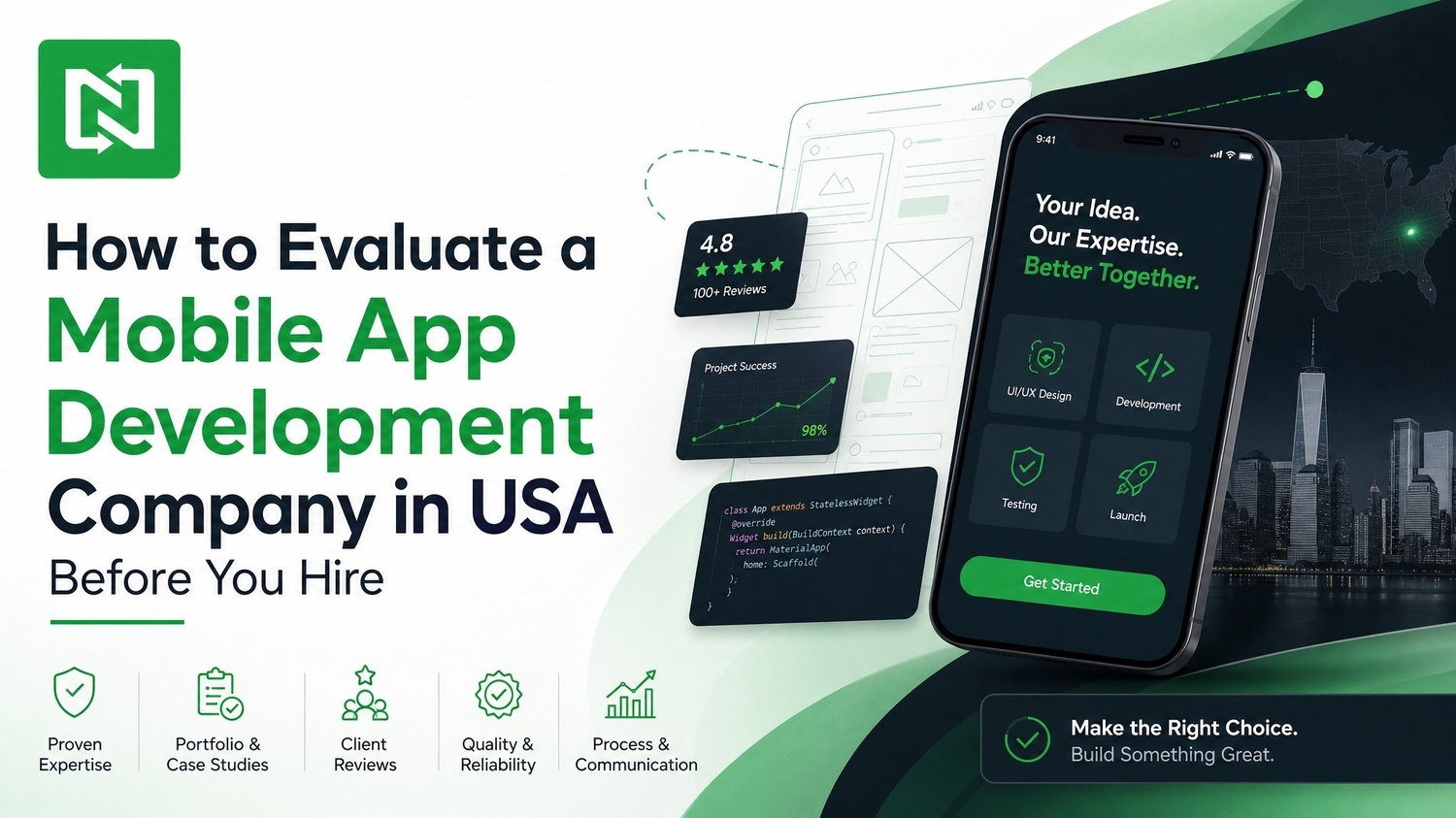
“How to evaluate a mobile app development company” is a question many businesses ask after seeing projects run over budget, miss deadlines, or fail to meet expectations. The challenge is that most vendor pages look similar, and confident sales language can hide thin delivery experience. Before you commit, it helps to know exactly what to inspect. If you are comparing options for a mobile app development company in USA, a structured evaluation will protect your budget and your launch date far better than instinct alone.
This guide walks through a practical checklist, from defining your own requirements to reading a portfolio, verifying technical skills, understanding pricing, and spotting warning signs early. The aim is to give you a repeatable way to compare any vendor on evidence rather than impressions.
1. Why Evaluation Matters More Than Sales Pitches
Every vendor will tell you they deliver quality work on time. The difference between a reliable partner and a risky one rarely appears in a pitch deck. It appears in shipped products, how a team handles questions, and the clarity of its process. A disciplined evaluation moves the decision away from persuasion and toward proof.
This matters because app projects often fail quietly. Scope creep, poor communication, and weak testing do not announce themselves on day one. They surface midway through, when changing direction is costly. Spending more effort on the selection stage is the cheapest insurance you can buy.
2. Define Your Requirements First
You cannot evaluate a vendor well until you know what you actually need. Before any calls, write down the core problem the app should solve, the primary users, the must-have features, and the platforms you intend to support. Add a rough budget range and a target timeline.
This document does two things. It keeps your comparison consistent across vendors, and it reveals quickly which companies listen carefully and which ones push a generic solution. A strong partner will ask sharp questions about your requirements rather than agreeing with everything you say.
3. How to Evaluate a Mobile App Development Company
A portfolio is the most honest part of any vendor conversation, because it shows finished work rather than promises. Look past the visual polish and study what the apps do and who they were built for.
3.1 Look for Relevant Domain Experience
An agency that has built apps in your sector understands the rules, the user expectations, and the common pitfalls. A team that has shipped healthcare apps, for instance, will already know about privacy requirements. Ask whether they have handled problems similar to yours, and request specifics rather than logos.
3.2 Check App Store Presence and Ratings
Ask for live links to apps the company has released. Open them on the App Store and Google Play, read recent reviews, and check whether the apps are updated regularly. An app that has not been touched in a long time can signal weak ongoing support, which matters as much as the initial build.
4. Technical Capabilities to Verify
Design and portfolios tell part of the story. The technical foundation decides whether the app stays stable and secure as it grows.
4.1 Platform and Stack Coverage
Confirm how the company approaches iOS, Android, and any web component. Some teams build native apps for each platform, while others use cross-platform frameworks to share code. Neither is automatically better. What matters is that the team can explain why a given approach fits your goals, budget, and performance needs.
4.2 Security and Compliance Practices
Ask how the team handles data protection, authentication, and storage, and whether they follow any relevant standards for your industry. Vague answers here are a warning sign. A capable partner can describe how they protect user data and how they keep the app patched against new vulnerabilities.
5. Understanding the Development Process
A clear process is one of the strongest signals of a mature team. Ask how they plan work, how often they share progress, and how they handle changes once a project is underway. Most reliable teams work in short cycles with regular demos, so you see real software early and often.
Pay attention to communication. Who will you talk to, how frequently, and through which tools. Projects rarely fail because of a single technical issue. They fail because small misunderstandings build up over time without being addressed. A team that builds communication into its process reduces that risk substantially.
6. How Pricing and Engagement Models Work
Price quotes are easier to compare once you understand the model behind them. Most companies offer a few standard engagement types, each suited to a different kind of project.
| Model | Best For | Trade Off |
| Fixed price | Well defined scope | Less flexible to change |
| Time and materials | Evolving requirements | Needs active oversight |
| Dedicated team | Long term products | Higher ongoing commitment |
Cost is also influenced by where the work is delivered. Some companies serving USA clients pair onshore coordination with offshore engineering to manage budgets without losing quality. A delivery team in Chennai, for example, can provide experienced developers at a different cost base while a local point of contact manages the relationship. Compare value and accountability, not just the headline rate.
Be cautious of quotes that look far lower than the rest. A price that looks unusually low often reflects missing scope, junior staff, or weak testing that becomes your problem after launch.
7. Questions to Ask Before Signing a Contract
A short list of direct questions can reveal more than a long meeting. Ask each shortlisted vendor the following:
- Who owns the source code and intellectual property once the project ends?
- What does your post-launch supportand maintenance include, and at what cost?
- How do you handle changes to scope during the project?
- Can I speak with a recent client about their experience?
- What happens to the project if a key developer leaves your team?
The answers, and how confidently they are given, will tell you a great deal about how the partnership is likely to feel in practice.
8. Red Flags to Watch For
Some signals consistently predict trouble. Treat the following as reasons to slow down and dig deeper before you commit.
- Guaranteed results: no honest team can promise specific download or revenue numbers.
- No clear process: vague answers about planning, testing, or communication suggest disorganization.
- Reluctance to share references: a confident team is happy to connect you with past clients.
- Unclear ownership terms: if the contract is fuzzy about who owns the code, walk away.
- Pressure to sign quickly: urgency tactics rarely serve your interests.
9. Frequently Asked Questions
- How many vendors should I evaluate before deciding?
Comparing three to five companies usually gives enough range to judge quality and pricing without slowing the decision unnecessarily. More than that often adds confusion rather than clarity.
- Is the cheapest quote ever the right choice?
Sometimes, but only when the scope, team experience, and support match the higher quotes. A low price tied to missing testing or junior staff tends to cost more later through rework and delays.
- Should I always insist on owning the source code?
In most cases yes, especially if the app is central to your business. Confirm code ownership in writing before the project starts, so there is no dispute at handover.
- What is the most overlooked factor when choosing a partner?
Post-launch support. Many buyers focus only on the build and forget that apps need ongoing maintenance to stay secure and compatible with new device updates.
10. Conclusion
Choosing a development partner is a decision best made on evidence. Define your requirements, study real portfolios, verify technical and security practices, understand the pricing model, and ask direct questions about ownership and support. The companies that answer clearly and confidently are usually the ones worth shortlisting.
A careful evaluation rarely takes long, and it saves far more than it costs. When you are ready to compare shortlisted options, judging a best app development company in USA against this checklist will help you separate strong delivery from confident marketing, so your project starts on solid ground.