Introduction
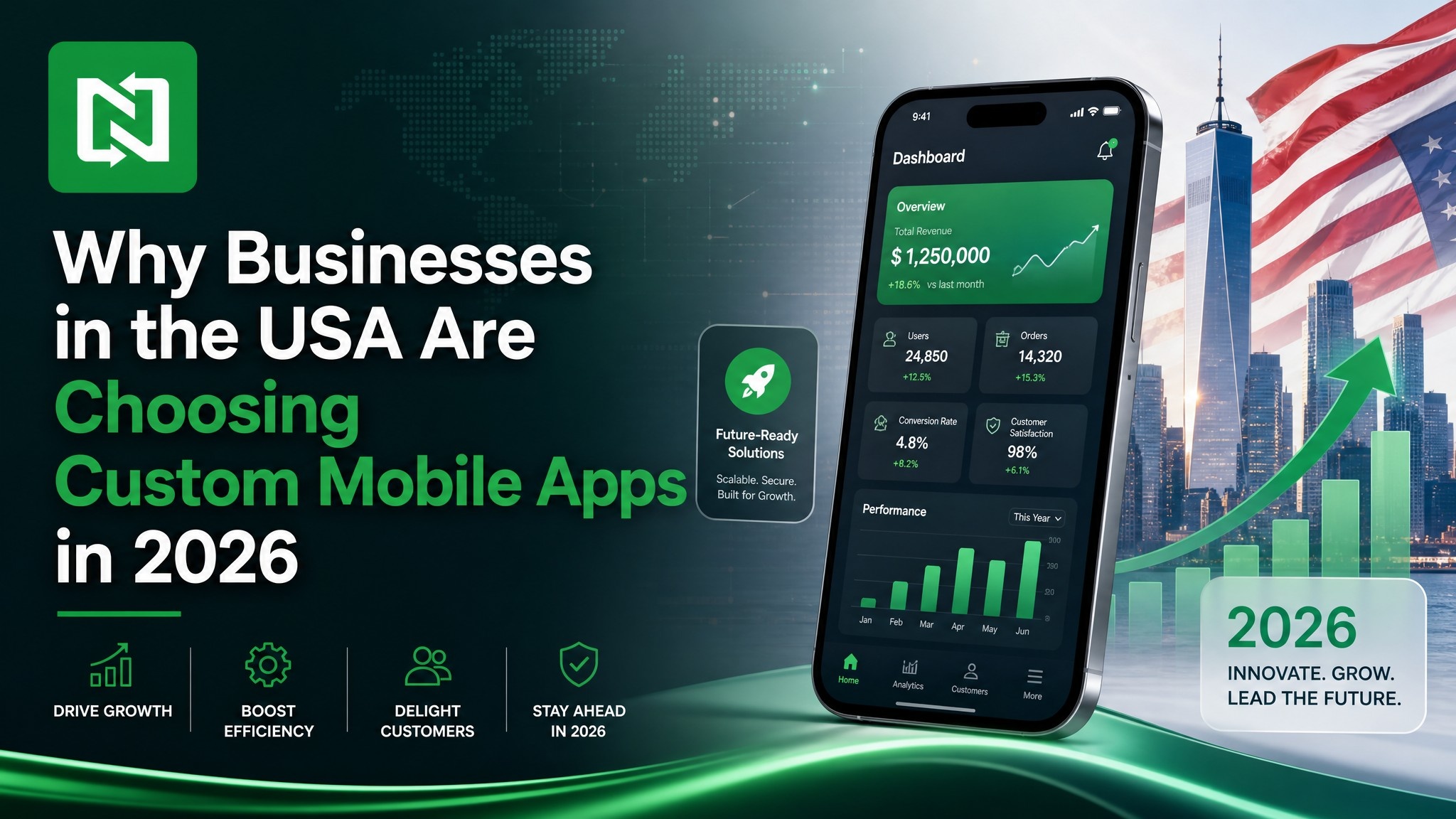
Mobile technology is the front door to most modern businesses in the United States, and in 2026 many companies now prioritise a mobile-first experience. Why businesses in the USA are choosing custom mobile apps is becoming easier to understand as companies focus on improving customer engagement, increasing retention, and creating stronger digital experiences. A custom mobile app is no longer a novelty. It is a practical way to own the customer journey and capture actionable data.
This shift is one reason a growing number of organizations now work with a trusted mobile app development company in USA rather than relying only on websites or off-the-shelf software. In 2026, a custom app is less about novelty and more about owning the customer experience from the first tap to ong-term loyalty.
This article looks at the practical forces behind that decision. It explains what a custom app actually solves, why specific industries are moving first, and what a business should expect when it commits to building one. The goal is to help you understand the business value before evaluating the investment required.
1. The Shift Toward Mobile First Operations in the USA
For many American consumers, the phone is now the primary computing device, not a secondary one. People open an app before they open a laptop, and they expect the same speed and convenience from a small local brand that they get from a national one. That expectation has changed how businesses plan their technology.
The conversation has moved from having an app to running on an app. A restaurant chain uses one system for ordering, loyalty, and delivery tracking. A clinic uses an app to manage appointments and reduce no-shows. A logistics company gives drivers a mobile tool that updates head office in real time. In each case, the app is not a marketing add-on. It is part of how the business operates day to day.
2. What a Custom Mobile App Actually Solves
Off the shelf software is built for the average user, which means it rarely fits any single business perfectly. Teams end up bending their process to match the tool, adding manual steps, spreadsheets, and workarounds to fill the gaps. A custom app reverses that relationship. The software is shaped around how the business already works.
That difference shows up in concrete ways. Consider a few examples:
- A retailer builds a loyalty app that connects directly to its point of sale system, so rewards update instantly without staff effort.
- A field service company gives technicians offline access to job details, so a weak signal does not stop work.
- A healthcare provider lets patients reschedule with a few taps, which cuts phone traffic and missed visits.
None of these outcomes come from a generic template. They come from software designed for one workflow, which is the core reason custom development continues to gain ground.
3. Why Businesses in the USA Are Choosing Custom Mobile Apps
The decision to build is usually driven by a small set of clear priorities rather than a single feature. Three reasons come up most often.
3.1 Ownership of the Customer Experience
When a business relies on a third party platform or marketplace, it shares the customer relationship and often pays for the privilege. A custom app keeps that relationship direct. The company controls the design, the messaging, the checkout, and the data, which makes it easier to build trust and repeat business over time.
3.2 Data You Can Actually Use
A custom app records the behavior that matters to a specific business, not just generic page views. Which features get used, where customers drop off, what they buy together, and when they return all become measurable. That information turns guesswork into informed decisions about products, pricing, and support.
3.3 Integration With Existing Systems
Most established companies already run accounting, inventory, CRM, or scheduling tools. A custom app can connect to those systems through their interfaces, so information flows in one direction instead of being copied by hand. This reduces errors and gives staff a single, current view of the business.
4. Industries Leading the Adoption
Custom mobile development is not limited to technology startups. Several established sectors in the USA are investing heavily because the return is easy to measure.
- Healthcare and wellness: appointment booking, patient reminders, secure messaging, and remote monitoring.
- Retail and ecommerce: loyalty programs, personalized offers, and faster mobile checkout.
- Logistics and transport: live tracking, route updates, and proof of delivery.
- Financial services: secure account access, payments, and identity verification.
- Field and trade services: scheduling, job documentation, and on site invoicing.
What these industries share is a need for reliability and a direct line to the customer or the field team. A well-built app delivers both.
5. How Custom Apps Differ From Template Solutions
Template builders and ready-made apps have a place, especially for testing an idea quickly. The trade-offs become clear once a business starts to grow. The table below outlines the practical differences.
| Factor | Template Solution | Custom App |
| Fit to workflow | Limited, you adapt to the tool | Built around your process |
| Scalability | Caps as usage grows | Designed to scale with demand |
| Ownership | Shared with the platform | Fully owned by the business |
| Integrations | Often restricted | Connects to existing systems |
| Long-term cost | Recurring fees that rise | Higher upfront, lower over time |
The right choice depends on the stage of the business. Companies that plan to grow, differentiate, or operate at scale usually find that custom development pays back the early investment.
6. What to Expect From a Capable Development Partner
Building a strong app is a structured process, not a single burst of coding. Experienced custom app developers typically move through discovery, design, development, testing, launch, and ongoing support. Each stage has a clear purpose, and skipping any of them usually shows up later as rework.
Discovery clarifies the problem and the users. Design turns that understanding into screens and flows. Development builds the product in tested increments. Quality assurance checks performance, security, and behavior across devices. Launch handles store submission and release. Support keeps the app stable and current after it ships.
This structured delivery process is one reason why businesses in the USA are choosing custom mobile apps to improve customer engagement, streamline operations, and build scalable digital experiences that support long-term growth.
Discovery clarifies the problem and the users. Design turns that understanding into screens and flows. Development builds the product in tested increments. Quality assurance checks performance, security, and behavior across devices. Launch handles store submission and release. Support keeps the app stable and current after it ships.
Delivery models also matter. Some firms serving American clients combine onshore coordination with engineering teams in established technology hubs, a model that can balance cost and capacity. A development team based in Bangalore, for example, can support a USA facing product with experienced engineers while local managers stay close to the client. What matters most is transparency, communication, and a track record of shipped work.
7. Frequently Asked Questions
- Is a custom mobile app worth it for a small business?
It depends on the goal. If the app supports a core process, improves customer retention, or removes manual work, the investment usually pays back. For a one-time experiment, a simpler solution may be enough at first.
- How long does it take to build a custom mobile app?
A focused first version often takes a few months, while a feature-rich product takes longer. Timelines depend on scope, integrations, and how quickly decisions are made during the project.
- Should the app launch on both iOS and Android?
That choice should follow your audience. Many USA businesses target both platforms, and cross platform frameworks can reduce cost while keeping a consistent experience. Native development is preferred when performance is critical.
- What happens after the app goes live?
Apps need maintenance to stay compatible with new operating system versions, to fix issues, and to add features based on user feedback. Ongoing support is part of any serious development plan.
8. Conclusion
The move toward custom mobile apps in the USA is driven by practical value, not hype. Businesses want to own the customer relationship, use their own data, and run software that fits the way they actually work. Custom development delivers that in a way templates cannot once a company starts to scale.
The deciding factor is rarely the technology itself. It is the partner you choose to build it. Taking time to assess experience, process, and communication will protect your investment. If you are weighing your options, reviewing what a capable app development company in USA brings to discovery, design, and long-term support is a sensible first step before any code is written.