
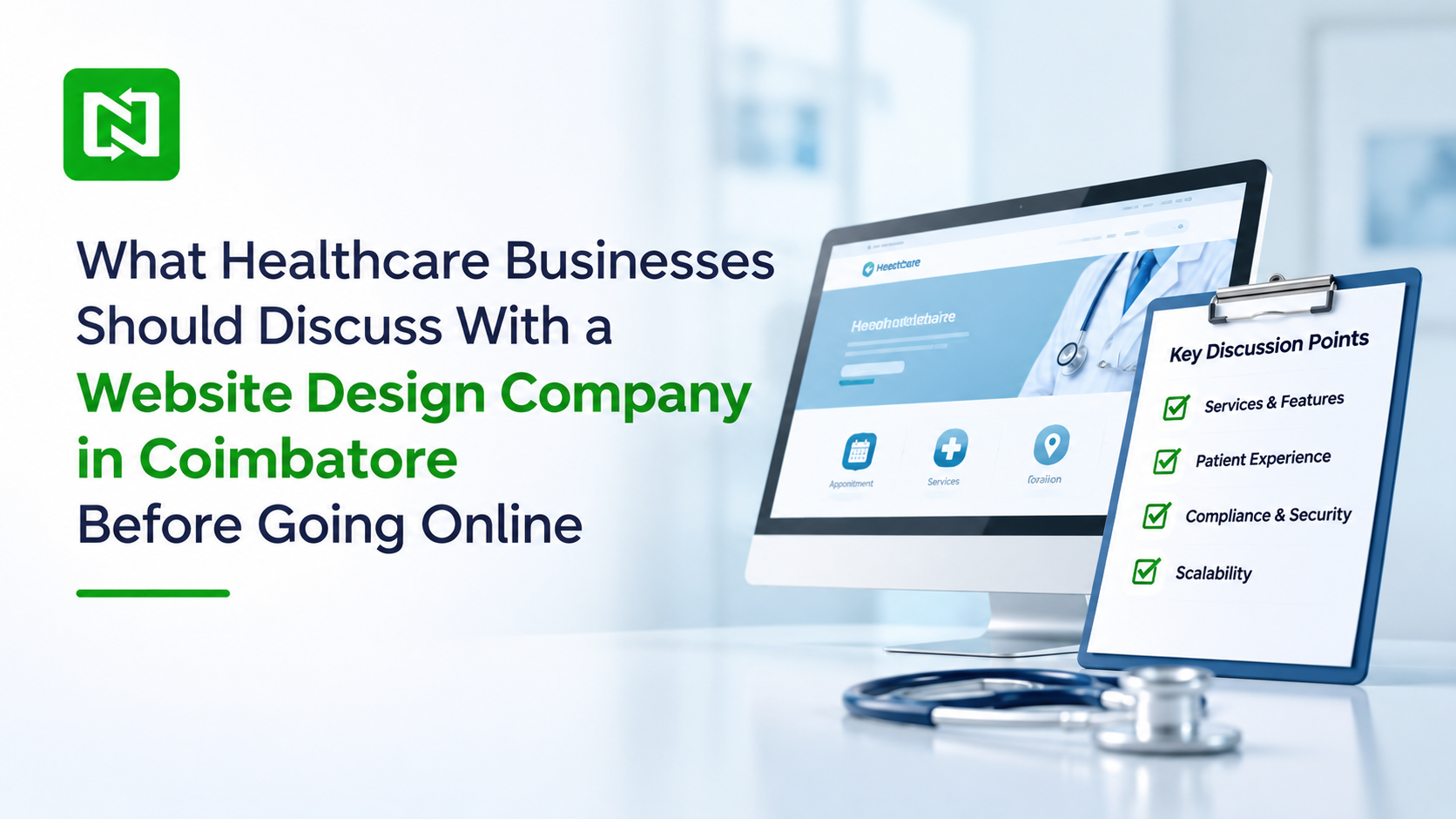
Choosing a website design company in Coimbatore is an important step for healthcare businesses preparing to go online. Whether you are opening a new clinic, expanding a hospital or launching a diagnostic centre, your website needs to help patients find services, understand their options and contact the right medical team. Before starting the design process, it is important to discuss medical content, appointment bookings, patient privacy, data security and ongoing website support. Which services should appear? Can patients book online? What happens to the details they type into a form?
Healthcare sites are different from a shop or a restaurant page. People visit them when they are worried, and they share sensitive information. A little preparation before the first meeting with an experienced local web design agency can save time, money, and awkward corrections later. This guide covers the topics worth raising early, from content and compliance to booking, privacy and ownership.
Start With Your Patients, Not the Layout
Before talking about colours or templates, describe who the site is for. A multi-speciality hospital near Avinashi Road serves a different audience from a physiotherapy clinic in Race Course or a diagnostic lab in Singanallur. Some visitors are patients searching late at night. Others are adult children looking for a trusted doctor for a parent, or companies comparing health check-up packages for employees.
Tell your agency what these people need in their first minute on the site. Usually it is a short list: what you treat, who the doctors are, where you are, how to reach you and how to book. When the team understands that list, the design follows naturally.
Also share what success looks like. Is it more appointment requests, more health check-up enquiries, fewer routine phone calls for the front desk or stronger visibility for a new branch? A clear goal keeps the project from drifting into decoration.
Medical Content That Earns Trust
Who Writes and Reviews the Information
Google gives greater weight to strong E-E-A-T (experience, expertise, authoritativeness and trustworthiness) for “Your Money or Your Life” topics, including health content. Treatment and condition pages should therefore demonstrate credible expertise and cite reliable sources. Ask the agency how content will be written and who will check it. The best arrangement is simple: writers prepare the draft in plain language, and a qualified doctor from your team reviews it before it goes live.
Include the reviewer’s name and qualifications on the page, along with the date it was last updated. Patients notice these details, and so do search engines.
Doctor Profiles That Answer Real Questions
A profile with only a photograph and a designation does little. Add the doctor’s qualifications, registration details, areas of focus, languages spoken and consultation days. A short video introduction can ease first-visit anxiety, particularly for paediatric or counselling services.
What You Can and Cannot Claim
Healthcare advertising in India is regulated, including under the Drugs and Magic Remedies (Objectionable Advertisements) Act, 1954, which prohibits false or misleading drug claims and specified claims for remedies for listed disorders. Avoid guaranteed cures, unverifiable or exaggerated outcome claims, misleading before-and-after material and comparative claims that disparage other providers. Advertising rules can be profession- and treatment-specific, so legal or compliance review is prudent for sensitive pages. Patient testimonials should be used only with appropriate consent, and case photographs require particular care to protect patient privacy.
Patient Privacy and Data Security
Even a small clinic website collects personal information. Discuss this openly, because many technical choices depend on it.
Map Every Place Data Enters
List each point where a visitor shares details: contact forms, appointment requests, report uploads, newsletter sign-ups and chat widgets. Then ask where that information is stored, who can view it and how long it is kept. Analytics and advertising tools also collect data about visitors, so they belong in the same conversation.
Consent and Legal Basics
India’s Digital Personal Data Protection Act, 2023 and the Digital Personal Data Protection Rules, 2025 set expectations around consent, purpose limitation and the handling of personal data. Compliance obligations are being phased in: certain provisions took effect on 13 November 2025 and 13 November 2026, while the principal operational obligations apply from 13 May 2027. Your agency is not your legal advisor, but it should know how to implement clear consent mechanisms, provide an accessible privacy policy, and support processes for handling requests to correct or erase personal data. Confirm the applicable compliance deadline and requirements with a legal advisor before launch; for many healthcare organisations, the core obligations begin on 13 May 2027.
Security Habits That Matter
At a minimum, expect HTTPS across the site, regular software updates, strong admin passwords with limited access, automatic backups and protection against spam submissions. Ask who is responsible for these tasks after launch. A site that was secure on day one can become vulnerable within months if nobody maintains it.
Appointments and the Patient Journey
Booking is where a healthcare website either helps or frustrates. Decide how appointments will work before design begins. Options include a simple request form that your staff confirms by phone, a calendar showing available appointment slots, or a WhatsApp Business flow for patients who prefer messaging. Each has staffing and cost implications, so match the choice to your front-desk capacity.
Think about edge cases too. Show emergency numbers prominently and state clearly that the site is not meant for urgent care. Explain cancellation rules, consultation fees where appropriate and what documents patients should bring. If you offer teleconsultations, describe how they work in a few simple steps.
Some practices later want reminders, report access and follow-up tracking in one place. That is the stage to speak with mobile app developers in the city, once the website has shown how patients actually behave.
Local Visibility for Clinics and Hospitals
Most patients search close to home. Ask how the site will help you appear for searches that combine a speciality with a locality. This usually means creating a separate page for each service, providing accurate location details for every branch, and maintaining a complete Google Business Profile with correct opening hours, photographs, and categories. Consistent name, address and phone details across online directories help avoid confusion.
Reviews deserve a policy. Encourage genuine feedback, respond politely to criticism and never offer rewards for positive ratings. Keep patient information out of public replies.
Speed, Accessibility and Language
Many visitors will use mobile phones, and some will be older adults or family members searching on a patient’s behalf. Design for mobile-first use, readable text and simple navigation. Insist on fast loading, good colour contrast and buttons that are easy to tap. Accessibility guidelines such as WCAG 2.1 or later offer a useful benchmark. Compress photographs of your facility and team without losing clarity, since heavy images are a common reason healthcare pages load slowly.
Language matters in this city. Discuss offering key pages in both English and Tamil, so a patient’s family can read about timings, preparation and instructions comfortably.
Connecting the Website to Your Existing Systems
Many hospitals and clinics already run software for billing, patient records or lab reports. Ask whether the website needs to connect with any of it, for example to show available slots, deliver reports or accept online payments. Each connection adds cost and security questions, so decide which ones are essential for launch and which can wait for a later phase.
If you are participating in India’s Ayushman Bharat Digital Mission, discuss whether the site should support ABDM-aligned features in the future. Even if you are not ready now, a flexible structure helps you avoid a rebuild later.
Budget, Ownership and Support
When evaluating a website design company in Coimbatore, ask for a written scope that lists pages, features, integrations and the number of revision rounds. Clarify who owns the domain, hosting account and content after delivery. Find out what ongoing support costs and how quickly issues are handled.
Find out what ongoing support costs and how quickly issues are handled. Healthcare sites change often, with new doctors, timings and packages, so routine edits should not need a developer every time.
A healthcare-ready web development partner with experience in appointment systems, patient portals and digital-health workflows will usually raise these points early. That is a good sign.
Questions to Bring to Your First Meeting
- Can you show similar work for clinics, hospitals or diagnostic centres?
- How will doctor review fit into the content process?
- Where will patient enquiries be stored, and who can access them?
- Which booking method suits our staff size?
- What maintenance, backup and security support follows the launch?
- How will we measure results, such as calls, bookings and form submissions?
Frequently Asked Questions
How long does a healthcare website take to build?
Timelines depend on the number of specialities, content readiness, and the time required for doctor approvals. A small clinic site can take a few weeks, while a multi-branch hospital with booking integration can take considerably longer.
Do small clinics really need online booking?
Not always. A clear phone number and a WhatsApp option may be enough at first. Add booking when call volume or missed enquiries justify it.
Can we use patient photos and reviews?
Yes, but only with clear written consent and appropriate safeguards for identifying details, and in accordance with applicable professional, advertising and privacy rules. When in doubt, leave it out.
Final Thoughts
Going online is easier when the big questions are answered before the first design draft. Decide who you are speaking to, what you can say, how you will protect data and how patients will reach you. Those answers shape a site that feels calm, credible and useful.
If you are planning a clinic, hospital or diagnostic centre website and want to talk through these points, Contact Us and share your plans.