Table of Contents
- Introduction
- Why New York Is a Global Hub for Startup Innovation
- What Separates Great App Developers in New York From the Rest
- The Journey From Startup Idea to Market-Ready Product
- Technologies Powering Successful Startup Apps
- Mistakes That Prevent Startups From Scaling
- How to Choose the Right App Developers in New York
- Emerging Trends Shaping Startup App Development
- Conclusion
Introduction
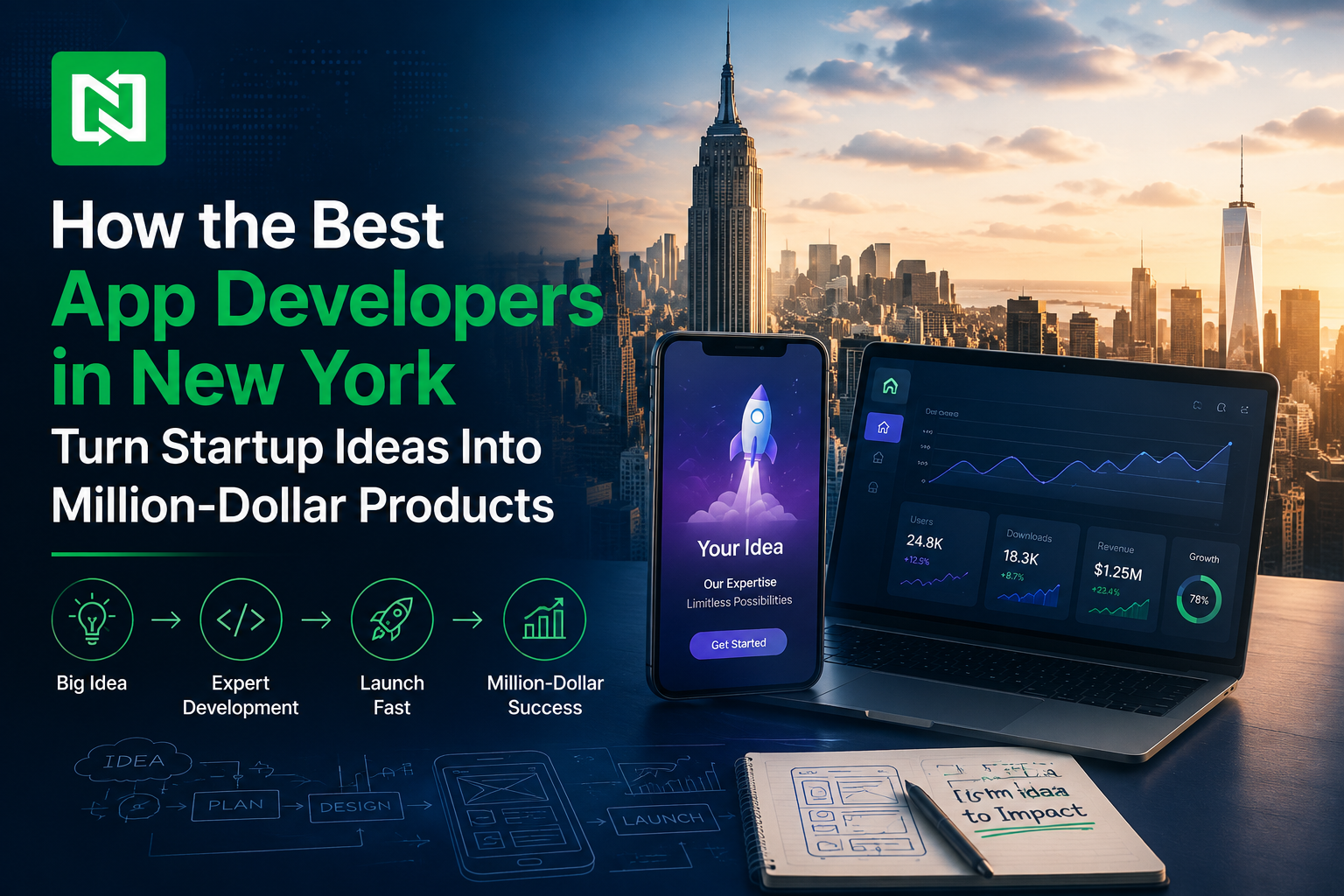
Every successful startup begins with an idea, but only a few transform into products that attract users, investors, and long-term growth. Behind many of these success stories are experienced app developers who understand technology, business strategy, and user behavior. New York has become one of the world’s leading startup ecosystems, making it home to development teams capable of turning ambitious concepts into scalable digital products. Choosing the right App Developers in New York can significantly influence a startup’s journey from concept to commercial success, and the decisions made in the earliest stages often shape everything that follows.
1. Why New York Is a Global Hub for Startup Innovation
Thriving startup ecosystem
New York’s dense concentration of founders, engineers, and industry specialists creates an environment where ideas move quickly from concept to prototype. Frequent meetups, industry conferences, and coworking communities give founders regular access to feedback and potential collaborators.
Access to investors and accelerators
The city hosts a significant share of venture capital activity in the United States, along with accelerator programs that help early stage companies refine their products and go-to-market strategy.
Diverse talent pool
Startups building in New York can draw from talent across finance, media, healthcare, and technology, which often results in products informed by cross-industry insight. This diversity also means development teams are often better equipped to understand the specific compliance and workflow demands of regulated sectors.
Strong enterprise connections
Proximity to established corporations gives startups earlier access to potential partners, pilot customers, and enterprise-grade expectations around reliability and security. These relationships often push young companies to adopt stronger engineering practices earlier than they might otherwise.
Rapid adoption of emerging technologies
New York based businesses and consumers tend to adopt new digital tools quickly, giving startups a responsive market to test and refine their products.
2. What Separates Great App Developers in New York From the Rest
Product-first mindset
The strongest teams treat the app as a business asset, not just a technical deliverable, aligning every feature with a clear commercial purpose.
Strong technical expertise
Deep proficiency across mobile, backend, and cloud technologies allows experienced developers to build applications that perform reliably as usage grows. This expertise also includes knowing when to introduce new technology and when a simpler, proven approach better serves the product.
Agile development approach
Iterative development cycles allow startups to adjust direction quickly based on real user feedback rather than waiting months between releases.
User-centric design philosophy
Great developers prioritize intuitive design because a confusing interface can undermine even the most innovative underlying technology.
Focus on scalability
Applications are architected from the beginning to handle growth in users, data, and features without requiring a costly rebuild later.
3. The Journey From Startup Idea to Market-Ready Product
Idea validation
Before development begins, experienced teams help founders test assumptions through research, competitor analysis, and early user conversations.
Product strategy and planning
A clear roadmap defines priorities, timelines, and success metrics, ensuring development stays focused on business outcomes rather than scope creep. Founders who invest time in this stage tend to make faster, more confident decisions once development is underway.
MVP development
Building a minimum viable product allows startups to launch quickly, gather feedback, and validate demand before committing to full scale development. This approach, when guided by experienced mobile app development services, helps founders avoid overbuilding features that customers may never use.
User testing and feedback
Structured testing with real users uncovers usability issues and feature gaps that internal teams often overlook.
Scaling after launch
Once product-market fit is established, development shifts toward performance optimization, new feature development, and infrastructure that can support rapid growth.
4. Technologies Powering Successful Startup Apps
Artificial Intelligence
AI powered features, from recommendation engines to intelligent automation, are increasingly central to how startups differentiate their products.
Cloud computing
Cloud infrastructure gives startups the flexibility to scale resources up or down based on demand, without heavy upfront investment. This elasticity is especially valuable in the early months, when usage patterns are difficult to predict with confidence.
Cross-platform development
Frameworks that support both iOS and Android from a shared codebase help startups reach more users while managing development costs.
API integrations
Connecting with third-party services, from payment processors to communication tools, allows startups to extend functionality without building everything from scratch.
Advanced analytics
Detailed usage data helps founders understand how customers actually interact with the product, guiding decisions about what to build next rather than relying on assumptions or guesswork.
5. Mistakes That Prevent Startups From Scaling
Building too many features initially
Startups that try to launch with every planned feature often delay their time to market and dilute focus on what actually matters to early users. A tighter initial scope makes it easier to learn quickly and adjust direction with confidence.
Ignoring customer feedback
Failing to act on user input, even when it contradicts the founder’s original vision, is one of the most common reasons promising products stall.
Weak product-market fit
Without genuine demand for the solution, no amount of technical polish will drive sustainable growth. Startups that continue investing heavily in a product before confirming real demand often struggle to recover once funding tightens.
Poor scalability planning
Applications built without future growth in mind often require expensive rework once usage increases significantly.
Choosing developers based only on price
The lowest cost option frequently results in technical debt, missed deadlines, and quality issues that cost more to fix later than they saved upfront.
6. How to Choose the Right App Developers in New York
Review startup experience
Teams that have worked specifically with early stage companies understand the pace, budget constraints, and uncertainty unique to startups.
Evaluate technical capabilities
Look for demonstrated proficiency across the specific technologies your product will require, from AI to cloud infrastructure.
Analyze portfolio and case studies
Previous work should show evidence of measurable outcomes, not just visually polished screenshots. Ask how past projects performed after launch, not only how they looked at delivery.
Understand development methodology
A structured, transparent process with clear communication reduces risk and keeps the project aligned with business goals.
Look beyond project delivery
The best partners remain engaged after launch, supporting iteration and growth rather than considering the relationship complete once the app ships.
7. Emerging Trends Shaping Startup App Development
AI-powered mobile applications
Startups are increasingly embedding intelligent features directly into the core user experience rather than treating AI as an add-on.
Low-code acceleration
Low-code tools are helping teams prototype and iterate faster, particularly for internal tools and early stage validation, though most consumer-facing products still require custom engineering to scale properly.
Predictive analytics
Startups are using predictive models to anticipate customer needs, from churn risk to personalized recommendations, allowing teams to act before problems affect retention.
Hyper-personalization
Tailoring content, pricing, and product experiences to individual users is becoming a baseline expectation rather than a differentiator.
Intelligent automation
Automating repetitive operational tasks allows lean startup teams to focus resources on growth and product development instead of manual, low-value work. Founders exploring scalable mobile app solutions are increasingly building these automation capabilities in from the start rather than retrofitting them after launch.
Conclusion
Building a successful startup requires more than a brilliant idea. It demands strategic planning, experienced development, continuous innovation, and a clear understanding of user needs. The best app developers in New York combine technical excellence with business insight, helping startups create products that attract customers, secure investment, and scale sustainably. If you are ready to turn your startup idea into a market-ready product, reach out to Noukha to discuss your project.
Frequently Asked Questions
1. Why do startups prefer app developers in New York?
New York offers access to experienced developers, startup expertise, investors, and a mature technology ecosystem.
2. How important is MVP development for startups?
An MVP helps validate ideas quickly, reduce development costs, and gather real user feedback before scaling.
3. What should startups consider before hiring an app development company?
Evaluate industry experience, technical expertise, communication, portfolio, scalability capabilities, and long-term support.