
Table of Contents
- Introduction
- Defining the Purpose of the Mobile Application
- Choosing the Right Development Approach
- Planning the User Experience from Day One
- Selecting the Right Technology Stack
- Building for Performance, Security, and Scalability
- Common Early Mistakes That Affect App Success
- Preparing for Launch and Future Growth
- Conclusion
- FAQs
Introduction
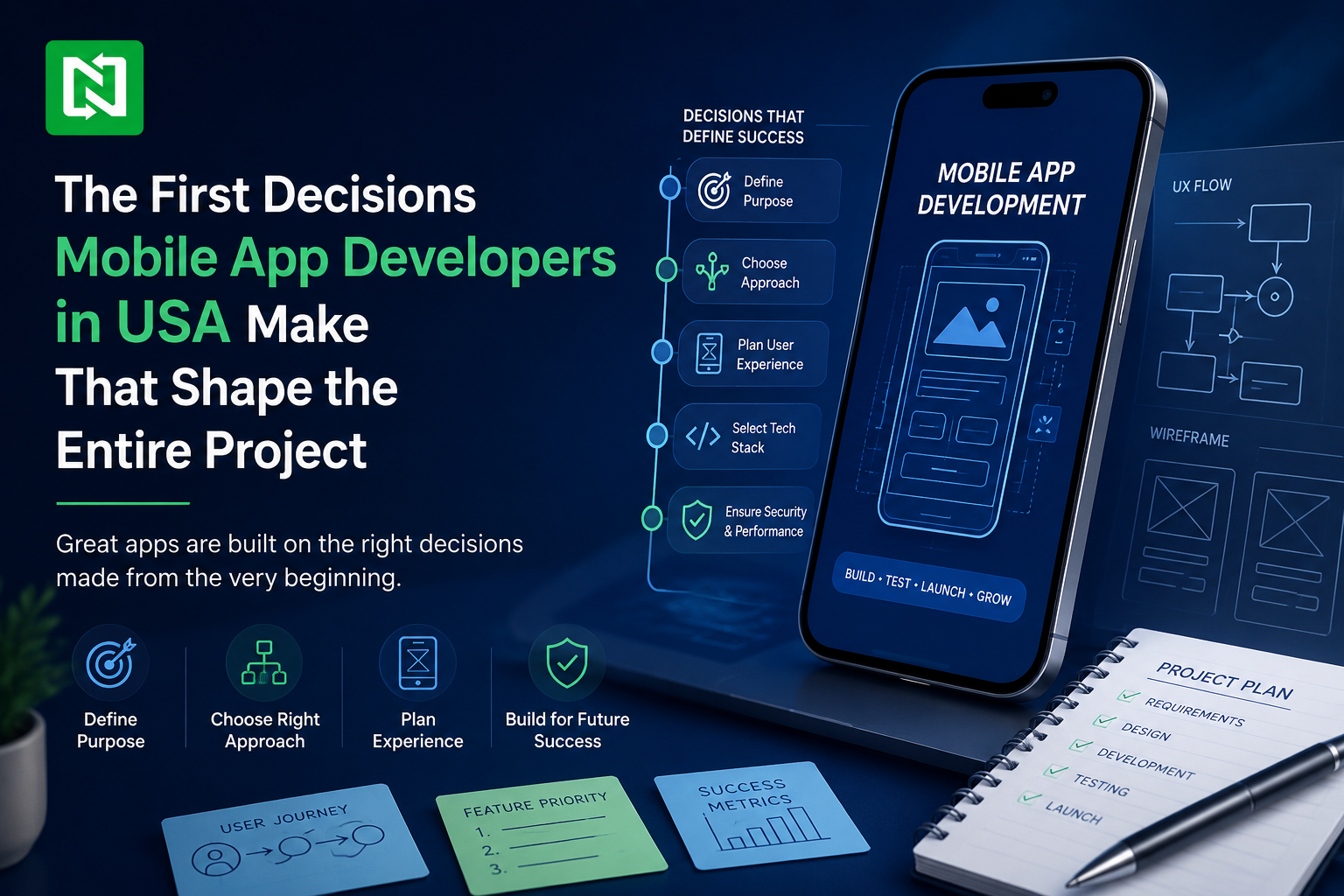
Every successful mobile app can be traced back to a handful of decisions made before a single line of code was written. These early choices, not the coding itself, often determine whether a project stays on budget, meets user expectations, and scales smoothly after launch. This is why experienced Mobile App Developers USA spend significant time on planning before development begins.
Rushing into development without a clear plan is one of the most common reasons mobile projects run over budget or fail to gain user adoption. Early decisions around purpose, platform, user experience, and technology create the foundation everything else is built on.
This guide walks through the key decisions that shape a mobile app project from the very beginning, the common mistakes that derail early momentum, and how businesses can prepare for a smoother path to launch and long-term growth. Readers will also gain a clearer sense of how much these upfront choices affect cost, timeline, and the app’s overall chance of success.
Defining the Purpose of the Mobile Application
Understanding business objectives
Before any design or development work starts, the app’s purpose needs to be tied directly to a business objective, whether that is increasing customer engagement, streamlining an internal process, or generating new revenue through a digital channel.
Identifying target users
A mobile app built without a clear picture of its intended users often ends up serving no one well. Understanding who will use the app, how often, and in what context shapes nearly every decision that follows, from the interface design to the technology chosen to support it.
Prioritizing essential features
Not every idea needs to be part of the first release. Successful projects identify a focused set of core features that solve the primary problem, leaving additional functionality for future updates once user feedback is available.
Choosing the Right Development Approach
Native development
Native apps are built specifically for one platform, either iOS or Android, using the platform’s own programming languages and tools. This approach typically delivers the best performance and closest integration with device features.
Cross-platform development
Cross-platform frameworks allow a single codebase to run on both iOS and Android, reducing development time and cost while still delivering strong performance for most business use cases.
Hybrid application development
Hybrid apps are built using web technologies wrapped inside a native container. This approach can be a practical option for simpler applications where speed to market matters more than deep platform-specific features.
Selecting the right approach based on business goals
The right choice depends on budget, timeline, required features, and how important platform-specific performance is to the app’s success. There is no universally correct answer, only the option best suited to a specific project. A business targeting a broad consumer audience quickly may prioritize cross-platform speed, while one building a performance-heavy app may lean toward native development instead.
Planning the User Experience from Day One
User journey mapping
Mapping out how a user will move through the app, from first launch to completing a key action, helps identify friction points before any design work begins.
Information architecture
Organizing content and features into a logical structure ensures users can find what they need quickly, without confusing navigation or unnecessary steps.
Wireframing and prototyping
Building low-fidelity wireframes and interactive prototypes allows teams to test ideas and gather feedback before investing in full visual design and development.
Accessibility considerations
Designing for accessibility from the start, including screen reader support and sufficient color contrast, ensures the app is usable by the widest possible audience and helps avoid costly redesigns later.
Many businesses formalize this stage through structured custom mobile app development processes that combine research, design, and validation before any code is written.
Selecting the Right Technology Stack
Front-end technologies
The front-end determines how the app looks and feels to users. Choices here affect performance, responsiveness, and how easily the interface can be updated over time.
Back-end infrastructure
A reliable back-end handles data storage, business logic, and communication between the app and external systems. Its architecture directly affects how well the app performs under real-world usage.
APIs and third-party integrations
Most modern apps rely on APIs to connect with payment systems, mapping services, analytics tools, or other business platforms. Choosing well-documented, reliable APIs reduces integration risk later and helps avoid unexpected delays during development.
Cloud services
Cloud infrastructure supports data storage, processing, and scalability, allowing an app to handle growth in users without requiring a complete rebuild of its underlying systems.
Building for Performance, Security, and Scalability
Secure application architecture
Security should be built into the app’s architecture from the beginning, not added as an afterthought. This includes secure data transmission, proper authentication, and careful handling of sensitive user information.
Performance optimization
Slow load times and laggy interactions are among the top reasons users abandon mobile apps. Performance testing throughout development helps catch issues before they affect real users.
Scalable infrastructure
An app that works well for a thousand users should also work well for a million. Planning for scalability early avoids painful and expensive infrastructure overhauls later.
Data protection strategies
Clear policies around data encryption, storage, and access control protect both the business and its users, particularly for apps handling financial or personal health information. These policies should be documented early so every team member understands their responsibilities around sensitive data.
Common Early Mistakes That Affect App Success
Undefined project scope
Projects that begin without a clearly documented scope often experience constant feature additions mid-development, leading to delays and budget overruns.
Ignoring user feedback
Skipping early user testing in favor of moving faster usually costs more time later, when usability problems surface after launch and require significant rework.
Underestimating testing
Testing is often treated as a final step rather than an ongoing part of development, which increases the risk of bugs and performance issues reaching real users.
Choosing technology too quickly
Selecting a technology stack based on trends rather than project requirements can create long-term maintenance challenges and limit future flexibility.
Preparing for Launch and Future Growth
Testing and quality assurance
Thorough testing across devices, operating systems, and real-world network conditions helps ensure the app performs reliably for the full range of users it will serve.
App Store Optimization (ASO)
A well-optimized app store listing, including relevant keywords, clear screenshots, and an accurate description, significantly affects how easily potential users can discover the app.
Performance monitoring
Ongoing monitoring after launch helps identify crashes, slow screens, or usability issues that only appear once the app is used at scale by real customers.
Planning future updates and maintenance
A mobile app is never truly finished. Planning for regular updates, security patches, and feature improvements keeps the app relevant as user expectations and operating systems evolve.
Businesses planning long-term growth often look for partners experienced in delivering scalable mobile app solutions that can evolve alongside changing business needs.
Conclusion
The decisions made before development begins, defining purpose, choosing the right platform approach, planning user experience, and selecting appropriate technology, shape the entire lifecycle of a mobile app. Projects that invest time in these early stages are far more likely to launch successfully and scale without major rework.
Businesses considering a new mobile application should treat early planning as seriously as development itself. Those ready to move forward with a clear strategy can Contact Us to discuss how to approach their specific project goals.
FAQs
What is the first step in mobile app development?
The first step is clearly defining the app’s purpose, including the business objective it supports and the target users it is designed to serve, before any design or coding begins.
How do developers choose the right technology stack?
Developers evaluate front-end and back-end requirements, necessary integrations, expected user load, and long-term scalability needs to select technologies suited to the specific project rather than following general trends.
Why are early planning decisions important for mobile app success?
Early decisions around scope, platform, and user experience directly affect development cost, timeline, and how well the finished app meets real user needs, making them far more impactful than changes made later in the process.