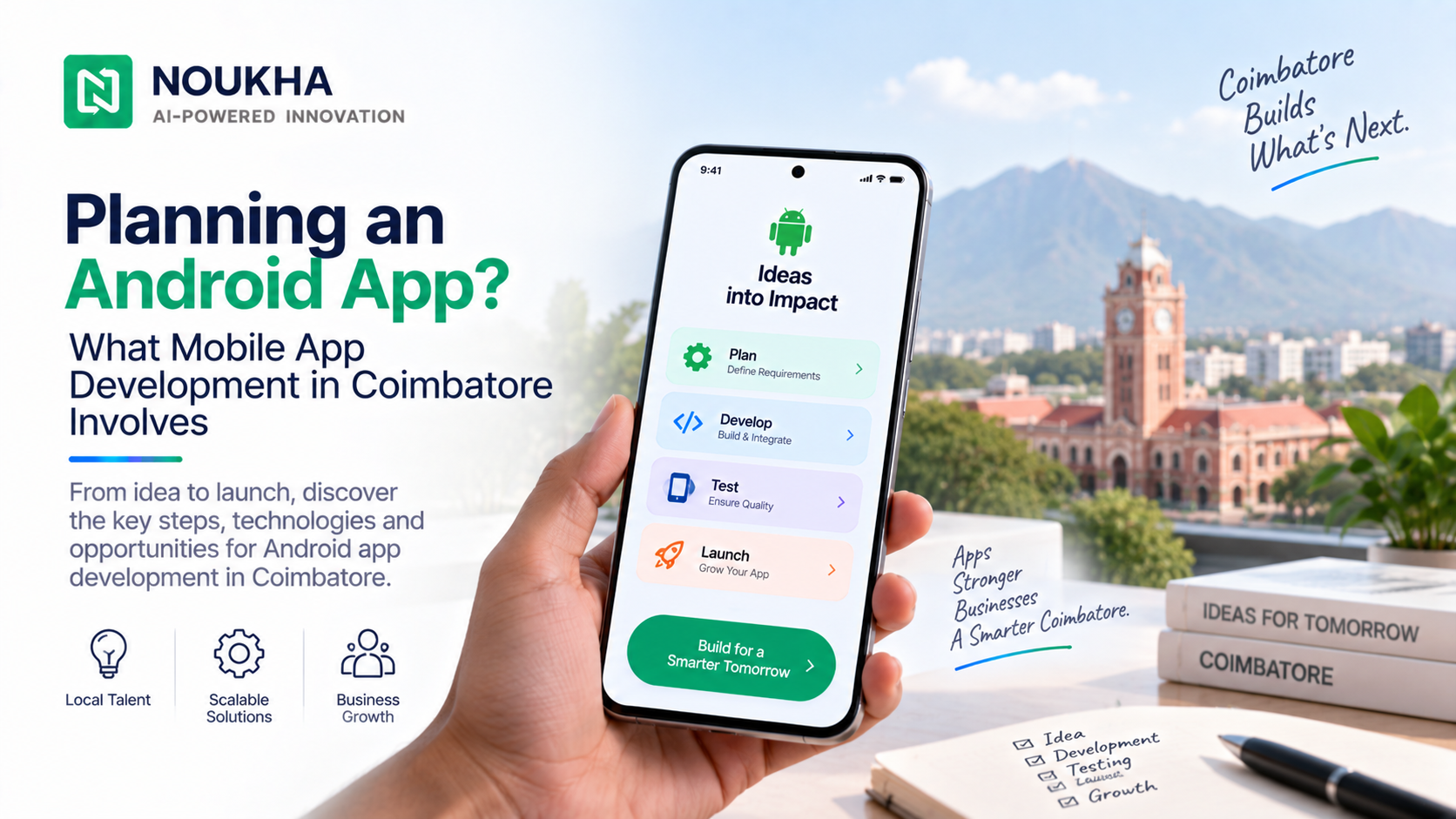
Android still runs on the majority of smartphones used across India, which is exactly why so many founders, shop owners, and growing companies in Tamil Nadu are exploring mobile app development Coimbatore services before they finalise a budget or a launch date. An app idea is easy to sketch on paper, but turning it into something people actually download, open again and recommend to a friend takes a fair amount of planning. This guide walks through what that planning looks like in practical terms, so you know what to expect before your first meeting with a development team.
Why Coimbatore Has Become a Practical Choice for App Projects
Coimbatore has an active technology and manufacturing ecosystem, sitting alongside a strong base of textile, education and healthcare businesses, which gives local companies several app development options to choose from. Some teams based here may offer competitive pricing and easier in-person collaboration compared with metro-based vendors, but this varies from company to company and is worth verifying through references, past work and written proposals rather than assuming it applies across the board.
This does not mean location alone guarantees a good outcome. What it does mean is that a well-chosen local partner can offer faster turnaround, easier communication across time zones for domestic clients, and a better understanding of the Android device landscape that is common in this part of the country, including budget phones with limited storage and inconsistent network speeds.
The Real Process Behind Building an Android App
Most people assume app development starts with writing code. In reality, coding is usually the fourth or fifth step, not the first. Skipping the earlier stages is one of the most common reasons apps go over budget or miss their launch window.
1. Discovery and Requirement Mapping
Before anything is designed or built, a competent team will ask you questions you may not have thought about yet. Who is the primary user? What problem does the app solve that a website cannot? Will it need to work offline? Should it integrate with an existing CRM, billing tool or inventory system? This stage typically produces a scope document and a rough technical roadmap, and it is the stage where unrealistic expectations get corrected early, before money is spent on the wrong features.
2. Wireframing and UI/UX Design
Once the scope is clear, designers sketch out screen flows before any visual styling happens. This is where navigation logic gets tested. Does the checkout process take three taps or eight? Can a first-time user find the settings menu without guessing? Good UX design for Android also accounts for different screen sizes, from compact budget phones to larger tablets, since Android devices vary far more than iPhones do.
3. Native or Cross Platform Development
This is the stage where the technical direction of the project gets locked in. Some businesses choose to build using cross-platform frameworks to save on early costs, while others go with Android app development built specifically for the platform because it can offer stronger performance, smoother animations, and fuller access to device hardware such as cameras, sensors, and biometric authentication. The right choice usually depends on how complex the app is expected to become over the next two to three years, not just what it needs to do on day one.
4. Backend and API Development
Behind every screen a user taps, there is usually a server handling logins, storing data, processing payments, or sending notifications. This backend work often takes longer than the visible app itself, especially for apps that need to scale to thousands of users or sync data in real time across devices.
5. Testing and Quality Assurance
Android testing is more involved than testing for a single device family, since thousands of Android device and OS combinations are in active use, though no team can realistically test every one of them. A responsible team instead takes a risk-based approach, prioritising the screen sizes, manufacturers, and OS versions most likely to match their actual users, often guided by device labs, emulators, and analytics from similar apps. Before the app goes anywhere near the Play Store, it is reasonable to ask exactly what that testing covers.
- Which devices and Android OS versions will be covered, and why those were chosen
- Whether testing includes low-end devices, different manufacturers, and Android Go builds
- How crash reports, app-not-responding errors, and performance metrics will be tracked after launch
- Whether accessibility, offline behaviour, and interrupted network scenarios are tested, not just the ideal path
6. Deployment and Post-Launch Support
Publishing to the Google Play Store involves meeting content policies, setting up store listing assets, and configuring app signing correctly. Launch is not really the finish line, though. Bug fixes, OS compatibility updates, and feature additions based on real user feedback usually continue for months, sometimes years, after the initial release.
Native Development Versus Cross-Platform: Making the Right Call
One of the most common questions founders bring up early is whether to invest in native Android app development in Coimbatore or a cross-platform framework such as Flutter or React Native that can also cover iOS from the same codebase. Native Android development, typically built using Kotlin or Java, may be preferable for advanced platform-specific features, demanding graphics, specialised hardware, or maximum control over how the app behaves on the device. Cross-platform frameworks can reduce duplicated work and cost for many business apps, though they still call for platform-specific testing and, occasionally, some native code of their own.
The right choice depends on your users, the feature set, performance needs, your team’s skills, budget, and how you plan to maintain the app over time, not on a blanket rule that one approach always wins. It also helps to be clear on the terms themselves before comparing options.
- “Native Android development” usually means building with Kotlin or Java using Android’s own platform APIs directly
- “Hybrid” is often used loosely; frameworks such as Flutter and React Native are cross-platform, not the older WebView-based hybrid apps
- Backend systems, admin panels, and analytics dashboards are separate technology and cost areas, regardless of which approach you choose for the app itself
Native development tends to pay off for apps that rely heavily on advanced animations, offline functionality, camera or GPS features, or that are expected to handle a large and growing user base. If your Android app is central to revenue and depends heavily on platform-specific features, performance, or hardware, native development may well be the safer long-term choice. For many other business apps, though, a well-architected cross-platform solution can also hold up over time, so it is worth asking a prospective developer to compare options against your product roadmap rather than only against what the app needs to do on day one.
Choosing the Right Development Partner in Coimbatore
Not every software company that lists app building as a service actually specialises in it. When evaluating app developers based in Coimbatore, it helps to look past the pitch deck and ask for specifics. A few questions worth asking during the first conversation include the following.
- Can they show apps they have actually published on the Play Store, not just design mockups?
- Do they explain technical decisions in plain language, or only in jargon?
- Who owns the source code and backend infrastructure once the project ends?
- What does their post-launch support and maintenance plan actually cover?
- How do they handle scope changes if requirements shift midway through the build?
A team that answers these clearly, without dodging the harder questions about cost or timeline, is usually more trustworthy than one that only talks about how fast they can deliver.
What Influences the Cost of an Android App
Pricing for app projects varies widely, and anyone quoting a fixed number without asking about your requirements first should be treated with some caution. The main factors that affect cost include the number of screens, whether the app needs a custom backend or can use existing tools, the complexity of features such as payment gateways or real-time chat, and how much design customisation is needed beyond standard templates.
A simple app with basic functionality, such as a digital menu or appointment booking tool, generally costs far less and takes far less time than an app with live tracking, in-app payments, or multi-user roles. It is worth asking for a breakdown by feature rather than a single lump sum, since that makes it easier to trim the scope later if the budget needs adjusting without losing the core function of the app.
Keeping Up with Android and Play Store Requirements
Google updates the Android platform and Play Store policies on an ongoing basis, and staying compliant is a continuous responsibility rather than a one-off task at launch. As of September 2026, Google requires new apps and app updates submitted to Google Play to target Android 16, API level 36 or higher, from 31 August 2026 onward, while existing apps must generally target Android 15, API level 35 or higher to stay available to new users on devices running newer versions of Android.
Before signing off on a maintenance plan, it is worth asking who will keep the app aligned with Google Play’s SDK, privacy, permission, billing, and review requirements, including these target API updates. This work should be built into the support agreement from the start rather than surfacing later as an unplanned cost. A few areas worth covering explicitly include the following.
- Privacy and data-safety disclosures inside the Play Console
- Permission justification and runtime-permission handling for sensitive device access
- Billing and subscription rules, where the app sells digital goods or services
- Content-policy compliance for user-generated content, gambling, finance, health, or other regulated categories
Common Mistakes Businesses Make When Planning Their App
A surprising number of app projects run into trouble not because of bad coding, but because of decisions made before development even starts. Skipping proper market research is one of the most frequent issues, where a business builds an app assuming demand exists without validating it with real users first.
Another common mistake is treating the app like a one-time project rather than an ongoing product. Android, its libraries, and Google Play’s policies change over time, and an app that receives no updates may gradually run into compatibility, security, or store-compliance issues, sometimes within a year or two, sometimes later. Businesses that budget only for the initial build, without setting aside resources for periodic updates, security patches, and store-policy work, often end up paying more later to fix an app that has fallen behind.
Overloading the first version with too many features is another trap. Launching with a focused set of core features, gathering feedback, and expanding gradually usually leads to a better product than trying to include everything at once and delaying the launch by months.
Final Thoughts Before You Start Your Project
Building an Android app is as much about planning and honest conversations as it is about writing code. Understanding the stages involved, knowing the trade-offs between native and cross-platform approaches, and asking the right questions when choosing a partner can save both time and money down the line. Whether you are building a simple utility app or a full-scale platform, taking the process seriously from the first meeting onward makes the eventual launch smoother and far less stressful.
Contact Us
If you have an Android app idea and want to talk through what it would take to build it properly, our team would be glad to walk you through the process. Reach out to explore mobile app development services in Coimbatore and get a clear, honest estimate based on what your app actually needs, not a generic package. You can contact us directly to share your requirements and get started.