
Table of Contents
- Why App Success Starts Before Development
- Defining Success Beyond Downloads
- The Business Strategy Behind Successful Mobile Apps
- The Role of User Experience in Long-Term Adoption
- Technology Decisions That Shape Future Growth
- Why the Development Partner Matters
- Common Mistakes Businesses Make Before Hiring
- A Practical Evaluation Framework for Choosing the Right Partner
- Conclusion
Introduction
A successful mobile application is rarely the result of great coding alone. Long before the first line of code is written, businesses must understand their users, define measurable objectives, and establish a product strategy that aligns with long-term business goals. Many organizations, however, focus primarily on development costs, programming languages, or delivery timelines while overlooking the strategic decisions that ultimately determine whether an application succeeds or fails.
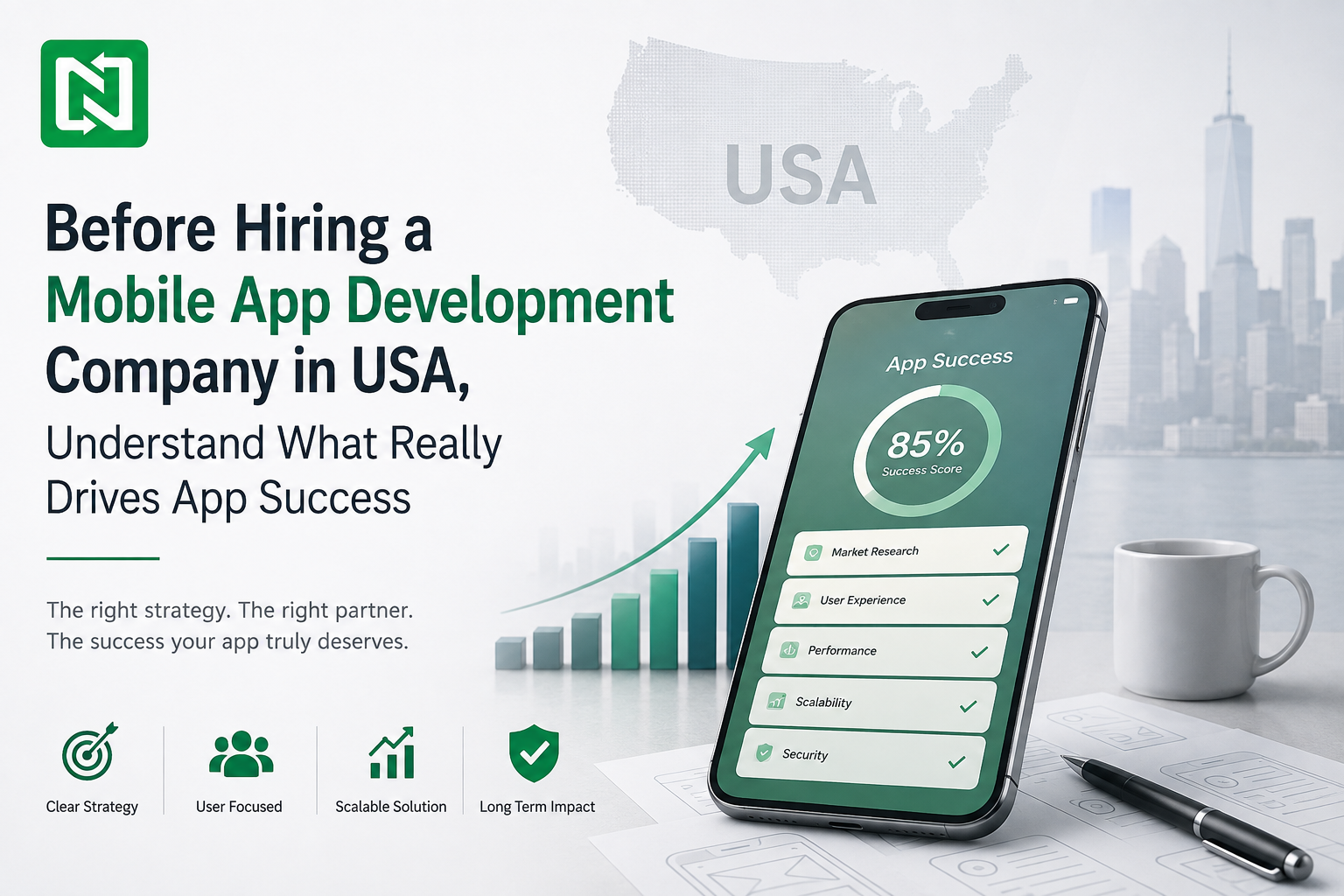
Choosing the right Mobile App Development Company in USA is not simply about finding developers. It is about partnering with a team that understands product strategy, user behavior, technology planning, and business growth. The most successful mobile applications are built through careful planning, validated ideas, and continuous improvement rather than rushing to launch.
This article explores the key factors that drive mobile app success before the development process begins. Whether you are a startup founder, product manager, or business leader, understanding these fundamentals will help you make more informed decisions and maximize the return on your technology investment.
1. Why App Success Starts Before Development
Many businesses assume that development begins when developers start writing code. In reality, successful mobile applications begin with understanding a business challenge and identifying how technology can solve it effectively.
Every successful app addresses a specific customer need or operational problem. Without a clearly defined objective, even technically impressive applications often struggle to gain adoption. Before selecting a development partner, organizations should answer several strategic questions:
- What business problem does the application solve?
- Who are the intended users?
- What measurable outcomes define success?
- How will the application support long-term business growth?
Answering these questions establishes a strong product foundation and reduces the likelihood of costly changes later in the development lifecycle.
Another critical step is validating market demand. Conducting customer interviews, competitor analysis, and market research helps determine whether an idea addresses a genuine need. According to CB Insights, one of the leading reasons startups fail is the absence of market demand, highlighting the importance of validating concepts before investing heavily in development.
Product discovery workshops, stakeholder interviews, and early prototyping also help businesses refine requirements before development begins. These activities reduce uncertainty, improve communication between stakeholders, and ensure technical decisions remain aligned with business priorities.
2. Defining Success Beyond Downloads
Launching an application is only the beginning. While download numbers often receive significant attention, they rarely reflect the overall success of a digital product.
A more meaningful evaluation considers how users interact with the application after installation. Metrics such as user engagement, retention, and customer satisfaction provide deeper insight into whether the product is delivering ongoing value.
Key performance indicators commonly include:
- Daily Active Users (DAU)
- Monthly Active Users (MAU)
- User retention rates
- Session duration
- Conversion rates
- Customer Lifetime Value (CLV)
- Revenue generated through the application
For example, an application with 50,000 downloads but poor user retention may contribute less business value than an app with 10,000 highly engaged users who regularly complete purchases or interact with the platform.
Successful organizations therefore establish measurable business objectives before development begins. Rather than focusing solely on acquisition metrics, they define outcomes such as reducing customer support requests, increasing online sales, improving operational efficiency, or enhancing customer loyalty.
By measuring business impact instead of vanity metrics, companies gain a more accurate understanding of their application’s contribution to long-term growth.
3. The Business Strategy Behind Successful Mobile Apps
A mobile application should never exist in isolation. It should support broader business objectives, whether that means increasing customer engagement, generating new revenue streams, improving operational efficiency, or strengthening brand loyalty. Organizations that treat mobile apps as strategic business assets typically achieve stronger long-term outcomes than those focused solely on technical execution.
The first step is identifying the target audience. Understanding user personas, their behaviors, pain points, and expectations enables businesses to prioritize features that solve real problems. Instead of attempting to include every possible feature in the first release, successful organizations adopt a Minimum Viable Product (MVP) approach. By launching a streamlined version with essential functionality, businesses can gather user feedback, validate assumptions, and refine the product based on actual usage.
Feature prioritization is equally important. Every new capability should support a measurable business objective rather than simply increasing the size of the application. A structured product roadmap helps teams align development with business priorities, ensuring future updates continue delivering value as customer needs evolve.
Many organizations also benefit from working with a custom mobile app development partner that understands both business strategy and technical execution. This collaborative approach helps translate business goals into scalable digital products while reducing unnecessary complexity throughout the development lifecycle.
4. The Role of User Experience in Long-Term Adoption
Even the most technically advanced mobile application can struggle if users find it difficult to navigate. User experience (UX) has become one of the most significant factors influencing customer satisfaction, retention, and long-term engagement.
Effective UX begins with simplicity. Users expect intuitive navigation, fast loading times, and consistent interactions across every screen. Complicated interfaces, excessive onboarding steps, or slow performance often result in users abandoning an application after only a few sessions.
Accessibility has also become an essential design consideration. Designing applications that accommodate users with varying abilities not only broadens the potential audience but also demonstrates a commitment to inclusive digital experiences. Features such as readable typography, sufficient color contrast, voice support, and clear navigation contribute to a more usable application for everyone.
Continuous improvement is another defining characteristic of successful products. User feedback collected through reviews, surveys, analytics, and behavioral insights provides valuable information about areas for enhancement. Rather than treating launch as the final milestone, high-performing organizations view it as the beginning of an ongoing product improvement cycle.
Small refinements, such as simplifying checkout processes, reducing screen transitions, or improving search functionality, often produce measurable improvements in engagement and customer satisfaction. Combined with regular usability testing and performance monitoring, these incremental updates help applications remain competitive as user expectations continue to evolve.
5. Technology Decisions That Shape Future Growth
Technology choices made during the early stages of development have a lasting impact on an application’s scalability, maintainability, and ability to adapt to future business needs. Rather than selecting technologies based solely on current trends, organizations should evaluate how each decision supports long-term product goals.
One of the first considerations is choosing between native and cross-platform development. Native applications generally offer superior performance and deeper integration with platform-specific features, making them well suited for applications that demand high responsiveness or advanced hardware capabilities. Cross-platform frameworks, on the other hand, enable businesses to develop for both iOS and Android using a shared codebase, reducing development time and simplifying maintenance for many business applications.
Scalability should also be incorporated into the initial architecture. As user numbers grow, the application must handle increasing traffic without compromising performance. Cloud-native infrastructure, modular architectures, and well-designed APIs allow applications to evolve as new features, integrations, and customer requirements emerge.
Security is another critical consideration. Mobile applications frequently process sensitive customer information, payment details, and business data. Implementing strong authentication, encryption, secure API communication, and compliance with applicable privacy regulations helps reduce security risks while building user trust.
Organizations planning long-term digital initiatives also benefit from investing in enterprise mobile application development strategies that prioritize scalability, security, and maintainability from the outset. These considerations reduce future redevelopment costs and create a stronger foundation for ongoing innovation.
6. Why the Development Partner Matters
Technology alone does not determine the success of a mobile application. The experience, communication style, and strategic thinking of the development team often influence project outcomes just as much as technical expertise.
A capable development partner contributes far more than software engineering skills. They participate in product discovery, help validate business requirements, recommend appropriate technologies, identify potential risks, and provide guidance throughout the product lifecycle. This consultative approach helps businesses make informed decisions before significant development resources are committed.
Transparent communication is equally important. Regular progress updates, collaborative planning sessions, and clear documentation reduce misunderstandings while ensuring stakeholders remain aligned throughout the project. Agile development methodologies further support this collaboration by allowing teams to review progress frequently and adapt to changing business priorities.
Long-term support should also be part of the evaluation process. Mobile applications require ongoing maintenance to remain secure, compatible with operating system updates, and responsive to evolving user expectations. Performance monitoring, bug fixes, feature enhancements, and security updates all contribute to maintaining application quality long after launch.
Ultimately, businesses should view their development company as a strategic technology partner rather than simply a software vendor. Organizations that establish collaborative, long-term relationships often achieve more sustainable digital growth because both teams remain focused on continuous improvement and shared business objectives.
7. Common Mistakes Businesses Make Before Hiring
Selecting a mobile app development company is a strategic business decision, yet many organizations rush the process. Tight deadlines, budget constraints, or the pressure to launch quickly often lead to decisions that increase costs and delay long-term success. Recognizing these common mistakes can help businesses make more informed choices.
One of the most frequent mistakes is selecting a development partner based solely on price. While controlling costs is important, the lowest proposal may not include strategic planning, quality assurance, long-term maintenance, or scalable architecture. Choosing a partner based only on budget can result in technical debt, poor user experience, and expensive redevelopment later.
Another common oversight is skipping the discovery phase. Businesses sometimes move directly into development without fully defining user requirements, business objectives, or product priorities. This often leads to changing requirements, delayed timelines, and unnecessary development costs.
Many organizations also underestimate the importance of post-launch support. A mobile application is not a one-time project but an evolving digital product that requires regular updates, performance optimization, and security improvements. Ignoring maintenance can reduce user satisfaction and increase operational risks over time.
Finally, businesses often focus on delivering every desired feature in the first release. A more effective approach is to launch with essential functionality, gather user feedback, and continuously improve the application based on real-world usage. This reduces risk while creating opportunities for sustainable product growth.
8. A Practical Evaluation Framework for Choosing the Right Partner
Choosing the right development partner requires evaluating more than technical capabilities. A structured assessment helps organizations identify companies that can support both immediate project goals and long-term business growth.
Consider the following evaluation criteria before making a decision:
- Relevant Portfolio: Review projects that demonstrate experience in your industry or similar business models.
- Technical Expertise: Assess proficiency in modern development frameworks, cloud technologies, API integrations, and security best practices.
- Product Strategy: Look for a partner that contributes ideas, challenges assumptions, and participates in product planning.
- Communication Process: Ensure there is a transparent reporting structure, regular progress updates, and clear documentation.
- Development Methodology: Agile practices, iterative releases, and continuous testing often improve project flexibility and quality.
- Scalability Experience: Confirm the team has experience building applications that support growing user bases and evolving business requirements.
- Long-Term Support: Evaluate their approach to maintenance, feature enhancements, security updates, and ongoing optimization.
Before signing a contract, businesses should ask practical questions such as:
- How do you approach product discovery?
- What is your process for handling changing requirements?
- How do you ensure application security and scalability?
- What level of post-launch support is included?
- Can you provide measurable outcomes from similar projects?
Organizations planning long-term digital growth often benefit from partnering with specialists in digital product development who combine technical expertise with strategic product thinking.
Conclusion
Building a successful mobile application starts long before development begins. Clear business objectives, validated market demand, thoughtful product strategy, user-centered design, scalable technology choices, and the right development partnership all contribute to long-term success.
Rather than viewing mobile app development as a purely technical exercise, organizations should approach it as a strategic investment that supports broader business goals. Careful planning today can reduce future costs, improve user satisfaction, and create a stronger competitive advantage.
If you are planning your next mobile application and want guidance on building a scalable, business-focused digital product, contact Noukha to discuss your requirements with our experienced team.
Frequently Asked Questions
1. What should businesses evaluate before hiring a mobile app development company?
Businesses should evaluate the company’s portfolio, technical expertise, communication process, product strategy, scalability experience, security practices, and long-term support capabilities. Selecting a partner with both technical and business knowledge leads to better project outcomes.
2. Does a higher development cost always mean a better mobile app?
Not necessarily. While quality development requires appropriate investment, successful mobile applications depend on strong planning, user experience, scalable architecture, and continuous improvement rather than price alone.
3. Why is post-launch support important?
Post-launch support ensures the application remains secure, compatible with new operating system updates, performs efficiently, and continues evolving based on user feedback and changing business requirements. Regular maintenance helps maximize the long-term value of the application.