
Introduction
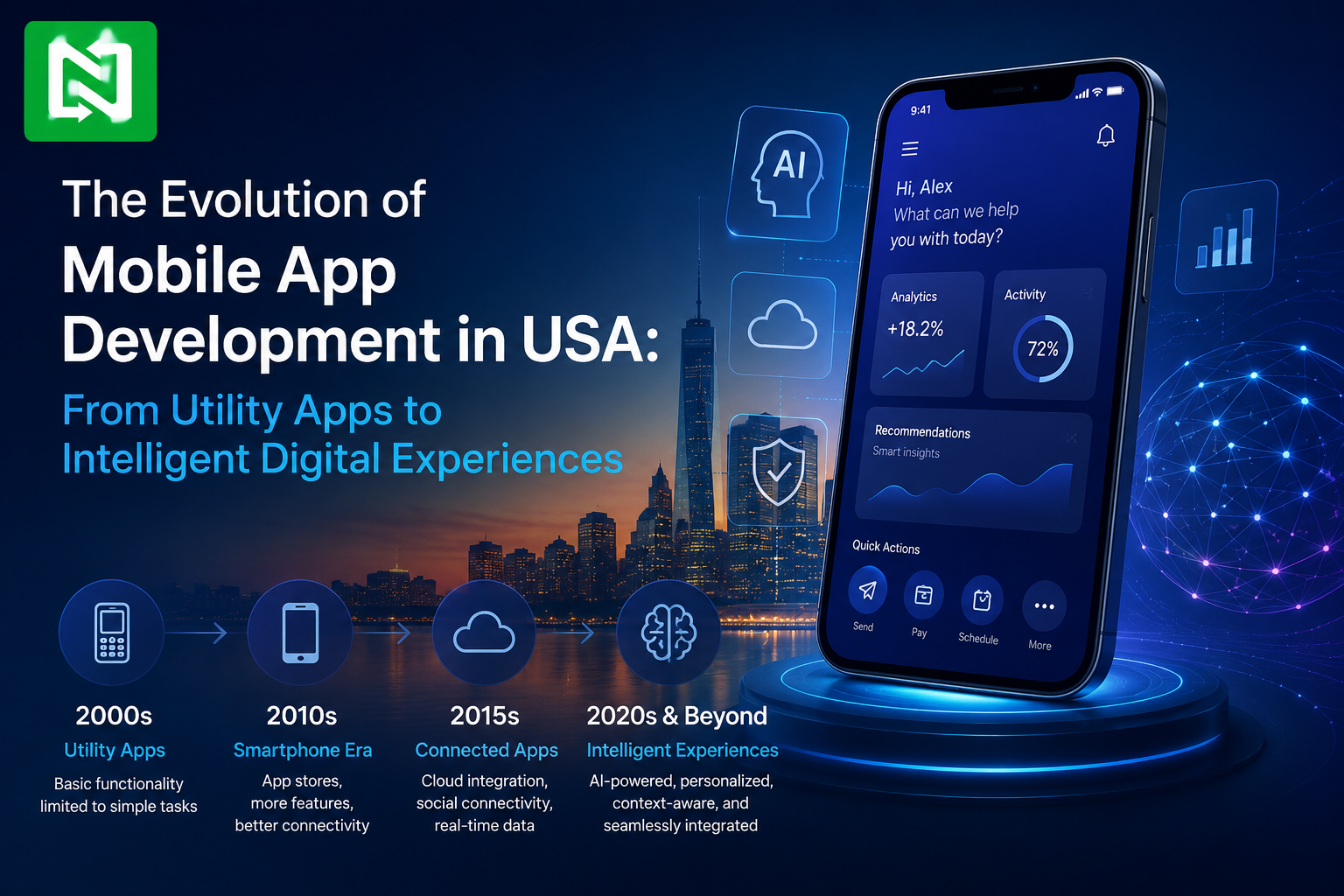
Mobile applications have quietly transformed from simple digital tools into intelligent companions that anticipate what people need before they ask for it. This shift did not happen overnight. It reflects two decades of changing consumer behaviour, rapid smartphone adoption, and a broader wave of digital transformation across every industry. In the early years, apps were built to perform narrow, functional tasks. Today, they are expected to understand context, personalize interactions, and deliver seamless value across devices. Mobile App Development in USA has followed this same trajectory, moving from basic utility software toward experience-driven, intelligence-led platforms. Understanding how this evolution unfolded offers valuable context for where mobile technology is headed next, and why user expectations continue to be the primary force shaping how applications are designed, built, and delivered.
The Early Days of Mobile App Development in USA
The Era of Utility Applications
The first generation of mobile apps existed to solve narrow, practical problems. Communication apps handled messaging and calling. Productivity tools managed calendars, notes, and basic file storage. These applications were valued for simple functionality rather than design sophistication or personalization. Screens were small, processors were modest, and developers worked within tight hardware limitations that restricted what an app could realistically achieve.
The Rise of Smartphones
The introduction of dedicated app stores changed the trajectory of mobile software entirely. Suddenly, developers had a direct channel to distribute software, and consumers had an easy way to discover it. This gave rise to broader mobile ecosystems built around software accessibility, where installing new functionality took seconds rather than requiring specialized technical knowledge. Consumer adoption accelerated quickly as smartphones became affordable, practical, and central to daily routines.
Early Development Challenges
Building for mobile in this period was far from simple. Fragmented platforms meant developers often had to build separate versions of the same app for different operating systems. Limited processing power constrained the complexity of features that could run smoothly. Battery limitations forced careful trade-offs between performance and usability, and slower internet connectivity meant apps had to be designed to function well even with unreliable data speeds. These constraints shaped a generation of engineers who learned to build lean, efficient software.
The Shift From Functional Apps to Experience-Driven Applications
User Experience Became the Priority
As the market matured, having a functional app was no longer enough to stand out. Usability became a competitive differentiator. Intuitive navigation, consistent performance, and simplicity in design started to determine whether users stayed engaged or abandoned an app after a single use. Development teams began investing heavily in interface design, recognizing that a frustrating experience could undo even the most technically sound backend.
Personalization Changed Expectations
Users began to expect apps that felt tailored to them. Customized content, user-centric design, and adaptive experiences replaced the one-size-fits-all approach of earlier software. This shift required developers to think beyond static screens and instead build systems capable of responding to individual behaviour and preferences over time.
Mobile Apps Became Digital Ecosystems
Applications stopped functioning as isolated tools and started operating as connected experiences. Integrated services allowed apps to communicate with one another, cloud synchronization kept data consistent across devices, and users came to expect continuity whether they were on a phone, tablet, or desktop. This interconnected approach laid the groundwork for the more sophisticated platforms seen today.
Technologies That Changed Mobile App Development
Cloud Computing
Cloud infrastructure gave developers access to scalable computing resources without the burden of managing physical servers. This enabled real-time synchronization across devices and made cloud-native apps possible, where core functionality lives on remote servers rather than being limited to what a single device can handle. The result was faster updates, better reliability, and applications that could grow with their user base.
Cross-Platform Development
Frameworks such as Flutter and React Native reshaped how teams approached building for multiple operating systems. Instead of maintaining separate codebases, developers gained code reusability that significantly reduced development time and cost. This approach made it practical for smaller teams and startups to launch applications across both major platforms simultaneously, accelerating faster development cycles industry-wide.
Advanced Security Technologies
As apps began handling more sensitive information, security became a foundational requirement rather than an afterthought. Biometric authentication, encryption, and secure APIs became standard practice. Development approaches shifted toward privacy-first development, where protecting user data is considered from the earliest stages of the design process rather than added later.
How User Expectations Continue to Shape Modern Mobile Apps
Demand for Instant Experiences
Modern users have little patience for delays. Speed and responsiveness are now baseline expectations rather than differentiators. Applications are judged within seconds of being opened, and seamless experiences across screens, transitions, and load times have become essential to retaining engagement.
Personalization at Scale
AI recommendations now power much of what users see inside their favourite apps, from content feeds to product suggestions. Behaviour-driven interfaces adjust dynamically based on how a person interacts with the app, and contextual experiences respond to factors like location, time of day, and prior activity. This level of personalization would have been technically unrealistic during the early utility-app era.
Continuous Innovation
Development has moved away from infrequent, large-scale releases toward continuous deployment, where features and fixes roll out incrementally. Customer feedback plays a direct role in shaping the product roadmap, and ongoing feature improvements ensure that applications evolve alongside the people who use them.
The Role of AI in the Evolution of Mobile Applications
Intelligent Recommendations
Recommendation engines are among the most visible examples of AI-powered mobile applications in everyday use. These systems analyse patterns in user behaviour to surface relevant content, products, or actions, driving deeper personalization without requiring the user to actively search for what they want.
Predictive Experiences
Predictive analytics allow applications to anticipate needs rather than simply react to input. Automation handles repetitive tasks in the background, while intelligent suggestions guide users toward relevant next steps. This shift from reactive to anticipatory design marks one of the more significant changes in how mobile software is conceived.
Conversational Interfaces
AI assistants built on natural language processing have made voice interaction a practical, everyday feature rather than a novelty. Users can now complete tasks, search for information, or navigate an app through conversational input, reducing friction for people who prefer speaking over typing. These capabilities represent a meaningful step toward more natural, human-centered interaction models, rather than a marketing feature layered on top of existing software.
What the Future Holds for Mobile App Development in USA
AI-Native Mobile Experiences
The next generation of applications is being designed with intelligence built into the foundation rather than added afterward. Intelligent automation, adaptive interfaces, and context awareness are becoming core architectural considerations, allowing apps to adjust behaviour in real time based on how and where they are being used.
Connected Digital Ecosystems
The boundaries of mobile app development now extend well beyond the smartphone itself. The Internet of Things, wearables, and other connected devices are increasingly part of the same experience, requiring applications to coordinate data and functionality across an expanding network of touchpoints.
Human-Centered Innovation
Looking ahead, accessibility, ethical technology, and sustainable software practices are expected to play a larger role in how applications are evaluated. As AI application solution continues to mature, the organizations that succeed will likely be the ones that balance technical capability with responsible, inclusive design. The future of mobile technology will not be defined solely by what is technically possible, but by how thoughtfully that capability is applied to real human needs.
Final Thoughts
The journey from simple utility applications to intelligent digital experiences reflects a broader story about how technology adapts to human behaviour rather than the other way around. Each phase of this evolution, from early functional tools to cloud-connected ecosystems to AI-driven personalization, was shaped by changing user expectations as much as by technical innovation. That pattern is likely to continue. As new technologies emerge, the most successful mobile applications will remain the ones that stay grounded in genuine user needs while embracing thoughtful, forward-looking innovation. Organizations exploring how intelligent features can be integrated into their own products are welcome to Contact our team to discuss where mobile technology is headed and how thoughtful development can support long-term digital goals.
Frequently Asked Questions
1. How has Mobile App Development in USA evolved over the years?
It has progressed from simple utility applications focused on basic functionality to experience-driven platforms shaped by cloud computing, cross-platform frameworks, and artificial intelligence. This evolution has been driven largely by changing user expectations around speed, personalization, and connectivity.
2. What technologies have influenced modern mobile app development?
Cloud computing, cross-platform frameworks such as Flutter and React Native, advanced security technologies, and artificial intelligence have all played significant roles in shaping how modern applications are designed, built, and maintained.
3. What is the future of Mobile App Development in USA?
The future points toward AI-native applications with adaptive interfaces, deeper integration with connected devices such as wearables and IoT systems, and a stronger emphasis on accessibility, ethics, and human-centered design principles.