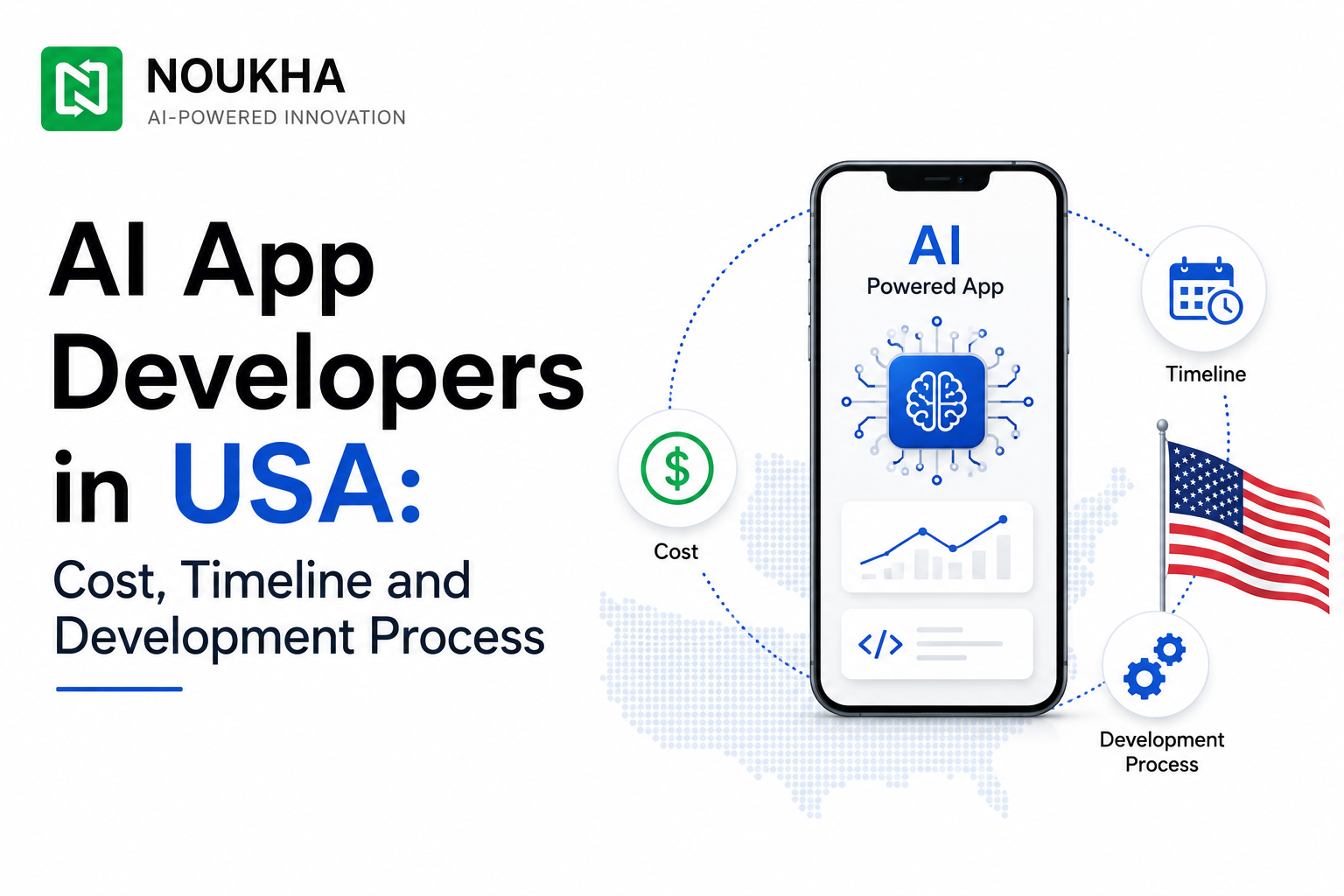
Asking how much an AI app costs is a bit like asking how much a house costs. The honest answer depends entirely on scope, and the range across the industry is wide enough to be almost meaningless without context. Current 2026 pricing guides show a very wide range, from roughly 10,000 USD for a focused prototype to 500,000 USD or more for complex enterprise AI platforms. Working with an experienced AI app developers team in the USA can help narrow that range to something specific to your actual project, rather than relying on a generic industry figure. This article breaks down what drives cost, what timelines typically look like, and what the development process actually involves.
What Determines the Cost of an AI App
Several factors consistently show up across industry pricing guides as the main drivers of cost, more so than the specific AI capability itself.
App Complexity and Feature Scope
A simple chatbot connected to an existing AI model through an API requires far less work than a business application with user roles, dashboards, approval workflows, and integrations into existing systems. For many API-based AI applications, the initial model integration is a smaller part of the development budget than application engineering, data work, integrations, evaluation, and security. At scale, however, ongoing model usage can become a significant operating cost, since API pricing is usage based and varies considerably depending on which model is selected and how often it is called.
Data Preparation and Readiness
Cleaning, organizing, and preparing data for an AI system can add a substantial amount to a project’s cost, and current sources consistently identify it as one of the largest project cost drivers. The actual figure varies enormously depending on data volume, format, quality, annotation requirements, privacy considerations, and how much existing infrastructure a business already has in place. Projects that skip proper data readiness often face costly rework later once the app is in use.
Custom Models vs Pre-Trained APIs
Building and training a custom model can cost substantially more than integrating an existing model API, with the budget depending heavily on the model architecture, training data, compute requirements, evaluation, and deployment infrastructure. There is also a meaningful difference between fine-tuning an existing model, training a smaller specialized model, and training a foundation model from scratch, and these approaches can vary in cost by an order of magnitude or more.
Team Location and Hourly Rates
Where a development team is based affects the hourly rate, which in turn affects overall project cost. Senior AI development rates in the United States can often fall around 100 to 200 USD or more per hour, depending on specialization, location, and engagement model, with specialized consultants and agencies sometimes exceeding that range. Offshore teams with comparable framework experience are often available at meaningfully lower rates, though this can affect communication, time zone overlap, and oversight requirements.
AI App Development Cost Breakdown by Tier
Current 2026 estimates commonly group AI app projects into broad cost tiers, although the boundaries vary considerably by scope and architecture.
Proof of Concept and Prototypes
A focused proof of concept, meant mainly to validate a specific idea or workflow, often falls somewhere in the range of 8,000 to 40,000 USD, depending on scope and whether the build relies on existing APIs rather than custom infrastructure.
Mid-Complexity Apps With Custom ML
Apps that integrate custom machine learning features, beyond a simple API connection, tend to fall in a broader range, commonly cited somewhere between 30,000 and 200,000 USD depending on the specific source and the complexity of the features involved.
Enterprise-Grade AI Platforms
Large-scale, enterprise-grade platforms involving custom models, real-time processing, or autonomous decision making workflows regularly exceed 300,000 to 500,000 USD, and can extend well beyond that for data heavy systems with strict compliance or security requirements.
Why Businesses Choose an AI App Development Specialist in the USA
For projects at this scale, working with an established AI app development specialist in the USA often matters more than at the prototype stage, since enterprise builds typically involve ongoing model monitoring, retraining pipelines, and security review that a smaller team may not be structured to support long term.
How Long Does AI App Development Actually Take
Timelines vary alongside cost, though several patterns show up consistently across industry sources.
Proof of Concept Timelines
A focused proof of concept can often be built within two to four weeks, assuming the scope stays narrow and relies primarily on existing model APIs rather than custom infrastructure.
MVP and Production Timelines
A production-ready minimum viable product typically takes somewhere between six and twelve weeks, while a fuller production build, with more complete features and integrations, often takes three to six months depending on complexity.
Enterprise Timeline Considerations
Enterprise platforms, particularly those involving custom model training, complex integrations, or strict compliance requirements, can take six to twelve months or longer, since these projects typically involve more extensive testing, security review, and phased rollout.
The AI App Development Process Step by Step
Understanding the typical process helps set realistic expectations for both cost and timeline.
Discovery and Architecture Validation
Before writing code, experienced teams typically validate the underlying architecture, data readiness, and governance requirements. Skipping this step is frequently cited as one of the most expensive mistakes in AI development, since early architectural problems tend to require costly rework once a project is further along.
Data Preparation and Model Selection
Once the architecture is validated, work typically shifts to preparing data and choosing between a hosted model API or a custom trained model, with most guidance recommending starting with an API unless there is a clear technical or business reason to train a proprietary model. Model selection at this stage also affects long term operating costs, since API pricing is typically charged per million tokens processed, and the rate can differ by a large multiple between a flagship model and a lighter, faster alternative from the same provider.
Development, Testing, and Deployment
The core build phase includes the application interface, backend systems, integrations, and the AI functionality itself, followed by testing for both standard software issues and AI-specific concerns such as inconsistent or incorrect model output.
What to Expect When Working With an AI Application Development Firm in the USA
A capable AI application development firm in the USA should be able to walk through this process transparently, including how testing accounts for AI-specific edge cases, rather than treating quality assurance the same way it would for a standard, non-AI application.
Hidden Costs Businesses Often Overlook
Several cost categories tend to surprise businesses after the initial build is complete.
- Ongoing inference costs, the per use expense of running an AI model, which can vary significantly depending on which model is used and how often it is called.
- Maintenance, which some 2026 industry estimates benchmark at around 15 to 25 percent of the original build cost annually, though actual costs vary depending on usage, infrastructure, model changes, and monitoring requirements.
- Model monitoring and periodic retraining, particularly for systems where performance can drift over time as real world data changes.
- Additional data preparation work discovered only after development begins, once the actual state of existing data becomes clear.
- Compliance and security review costs for apps handling sensitive data, particularly in regulated industries such as healthcare or finance.
How to Get an Accurate Quote for Your Project
Because published cost ranges are so broad, getting a number specific to your actual project matters more than comparing generic industry figures. This typically starts with defining a clear, narrow first version of the app rather than attempting to scope an entire long term vision upfront.
From there, it helps to ask a potential development partner directly about their approach to data readiness, their testing process for AI-specific issues, and what ongoing costs to expect after launch, rather than focusing purely on the initial build price. A transparent partner should be willing to walk through these details before asking for a commitment.
Frequently Asked Questions
What is a realistic starting budget for a basic AI app?
A simple API-based AI app can start in the low tens of thousands of USD, although the actual cost depends on features, integrations, data requirements, security, testing, and the development team’s rates.
Why do AI apps cost more than traditional software apps?
AI apps often require additional work in data preparation, model evaluation, and handling uncertain or inconsistent model output, none of which apply to traditional software that follows fixed, predictable logic.
How long does it typically take to build an AI powered MVP?
Many industry sources cite a range of roughly six to twelve weeks for a production-ready minimum viable product, though this depends on the complexity of the features and how much custom integration is required.
Is it cheaper to use an existing AI model instead of training a custom one?
Yes, in most cases. Using a pre-trained model through an API is typically far less expensive than training a custom model from scratch, and many guides recommend starting this way unless there is a specific technical or business reason to do otherwise.
What ongoing costs should I expect after an AI app is built?
Common ongoing costs include inference or API usage fees, maintenance, which some 2026 estimates benchmark around 15 to 25 percent of build cost annually, and periodic model monitoring or retraining, particularly for apps where performance can shift as real world data changes.
Final Thoughts
The cost and timeline for an AI app depend far more on scope, data readiness, and whether a project relies on existing models or custom training, than on the specific AI capability being built. Businesses that start with a clearly defined first version, and ask potential partners detailed questions about process and ongoing costs, tend to end up with a far more accurate budget than one based on a generic industry range. If you are ready to scope your specific project and get a realistic estimate, get in touch with our team to discuss what your app actually needs.