Introduction
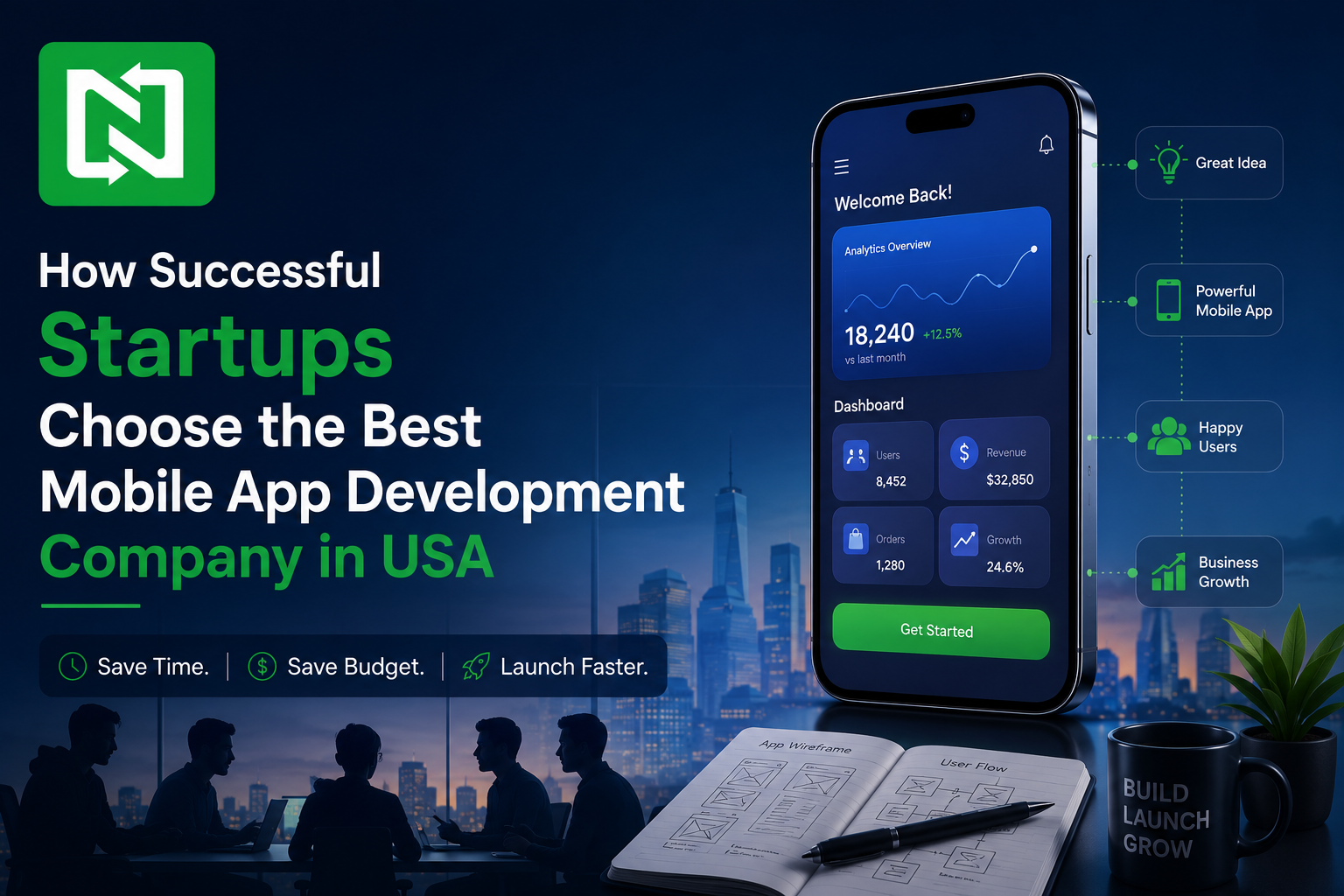
Mobile applications have become one of the fastest ways for startups to reach customers, validate ideas, and generate revenue. Founders no longer treat an app as an optional extra. For many businesses, it is the primary product, which makes choosing a development partner one of the most important decisions a startup will make in its early years.
Finding the right Mobile App Development Company in the USA is not simply about hiring programmers. It is about choosing a partner who understands business goals, user behavior, and the technical realities of building software that can grow with demand. Startups that skip this evaluation often end up with delayed launches, ballooning budgets, and apps that frustrate users instead of retaining them.
This article walks through what founders should look for before signing a contract, the mistakes that quietly drain time and money, and the questions that separate a dependable partner from a risky one.
Why Choosing the Right Development Partner Matters
The company you choose to build your app does more than write code. It shapes how your product performs, how quickly it reaches the market, and how easily it can grow later.
A capable partner brings:
- Product quality that reduces bugs, crashes, and post-launch firefighting
- Scalability built into the architecture from day one, so growth does not require a rebuild
- Faster time to market, which matters most when competitors are moving quickly
- Long-term business value, since a well-built app becomes an asset rather than a liability
Startups often underestimate how much technical debt from a rushed build can cost later. A poorly structured codebase may look fine at launch but becomes expensive to maintain once user numbers increase. Choosing carefully at the start prevents this problem before it begins.
Define Your App Goals Before Hiring
Before contacting any development company, founders should have clarity on what they are trying to build and why. This preparation makes conversations with potential partners more productive and helps avoid scope confusion later.
Key areas to define include:
- Business objectives, such as the problem the app solves and how it supports revenue goals
- Target audience, including demographics, device preferences, and usage habits
- MVP planning, focusing on core features needed to test the idea rather than every feature imaginable
- Budget planning, with a realistic range based on the complexity of the product
- Timeline expectations, factoring in design, development, testing, and app store approval
Startups that approach vendors with vague requirements often receive vague proposals in return. A clear brief leads to more accurate estimates and better alignment from the first meeting.
Essential Qualities of a Mobile App Development Company
Not every development company operates the same way. Startups should evaluate potential partners across several dimensions rather than relying on a single factor like price or portfolio size.
Industry experience matters because a company familiar with your sector understands common user expectations, compliance requirements, and typical pitfalls.
UI/UX expertise is essential since user experience directly affects retention. An app that is difficult to navigate loses users quickly, regardless of how well the backend performs.
Android, iOS and cross-platform capabilities allow startups to choose the right approach for their audience. Some products benefit from native performance, while others benefit from cross-platform app development that reduces cost and speeds up delivery across both operating systems.
Agile methodology ensures the project moves in short, reviewable cycles rather than disappearing for months before a single working version is shown.
Transparent communication keeps founders informed about progress, blockers, and decisions that affect cost or timeline.
Post-launch maintenance is often overlooked, yet apps require updates, security patches, and performance monitoring long after the initial release.
If you are exploring options for a trusted Mobile App Development Services, evaluating these qualities early will save significant time during vendor selection.
Common Mistakes Startups Should Avoid
Many startups make preventable errors when selecting a development partner. Recognizing these patterns in advance can protect both budget and timeline.
- Choosing based only on price, which often leads to hidden costs, rework, or subpar quality
- Ignoring technical expertise, assuming that all developers can handle any type of project equally well
- Skipping portfolio reviews, missing the chance to see how a company handles real-world constraints
- Weak project planning, resulting in unclear milestones and scope creep
- No long-term support strategy, leaving the app vulnerable once issues appear after launch
These mistakes are rarely obvious at the start of a project. They tend to surface weeks or months in, when correcting a course is more expensive than getting it right from the beginning.
Questions Every Startup Should Ask Before Signing
A short but focused conversation before signing a contract can reveal a great deal about how a company operates.
Have you built similar projects before? Reviewing past work in a comparable industry or app category shows whether the team understands your specific challenges.
What does your communication process look like? Understanding how often updates are shared, and through what channels, sets expectations for the entire engagement.
What technology stack do you use, and why? The answer should align with your app’s complexity, scalability needs, and long-term maintenance plans.
How do you handle maintenance after launch? Ongoing support terms should be discussed upfront rather than negotiated after problems appear.
How do you manage change requests? Startups evolve quickly, so a clear process for handling scope changes prevents disputes over cost and timeline later.
Asking these questions directly, and comparing answers across a few companies, often reveals more than marketing material.
Understanding Development Costs and Timelines
Development costs vary significantly based on complexity, platform choice, and the level of customization required. Several factors influence the final price:
- The number of platforms involved, since Android app development and iOS app development each require dedicated design and testing
- The complexity of features, including integrations, backend infrastructure, and data security requirements
- The experience level of the team assigned to the project
- Whether the build starts as an MVP development effort or a full-scale product from day one
Development typically moves through discovery, design, development, testing, and deployment stages. Rushing any stage to save time often creates more work later, particularly during testing.
Balancing affordability and quality does not mean choosing the cheapest option. It means understanding what you are paying for and ensuring the investment matches the app’s role in your business strategy. A company offering mobile application development services with clear cost breakdowns tends to be more trustworthy than one offering a single vague estimate.
How to Build a Long-Term Technology Partnership
The relationship with your development company should not end at launch. Apps require ongoing attention to remain competitive and functional.
- Long-term collaboration allows your partner to understand your product deeply over time, reducing onboarding friction for future updates
- Continuous improvements based on user feedback and performance data keep the app relevant
- Scaling the application as your user base grows requires infrastructure planning that a knowledgeable partner can anticipate
- Measuring ROI through analytics helps confirm that the app continues to support business goals, not just technical benchmarks
Startups that treat their development company as a long-term product development partner, rather than a one-time vendor, tend to see stronger outcomes across the life of the application. This is particularly true for businesses planning to build scalable mobile applications or eventually expand into enterprise mobile apps as the company grows.
For startups ready to move forward, working with experienced mobile app developers can significantly reduce the risks associated with custom app development.
Conclusion
Choosing the right mobile app development partner is not a decision to rush. It affects product quality, budget control, and how quickly your idea can reach real users. Startups that define their goals clearly, evaluate companies on substance rather than price alone, and ask the right questions before signing tend to avoid the costly mistakes that derail early-stage products.
A Mobile App Development Company that offers technical expertise, transparent communication, and long-term support can become a genuine asset to your business rather than just a service provider. If you are ready to discuss your app idea with a team that understands startup priorities, feel free to Contact Us to start the conversation.
FAQ
How do startups choose the best mobile app development company in USA?
Startups should evaluate potential partners based on industry experience, technical expertise, portfolio quality, communication practices, and post-launch support, rather than focusing on price alone. Defining clear project goals before reaching out also helps ensure accurate proposals and better alignment.
How much does startup mobile app development usually cost?
Costs vary widely depending on app complexity, chosen platforms, feature scope, and whether the project starts as an MVP or a full-featured product. A detailed discovery conversation with a development company is the most reliable way to get an accurate estimate.
Why should startups begin with an MVP?
Starting with an MVP allows startups to test core assumptions with real users before investing in a full-featured product. This approach reduces financial risk and provides valuable feedback that can guide future development decisions.